JackerySmallest that fits
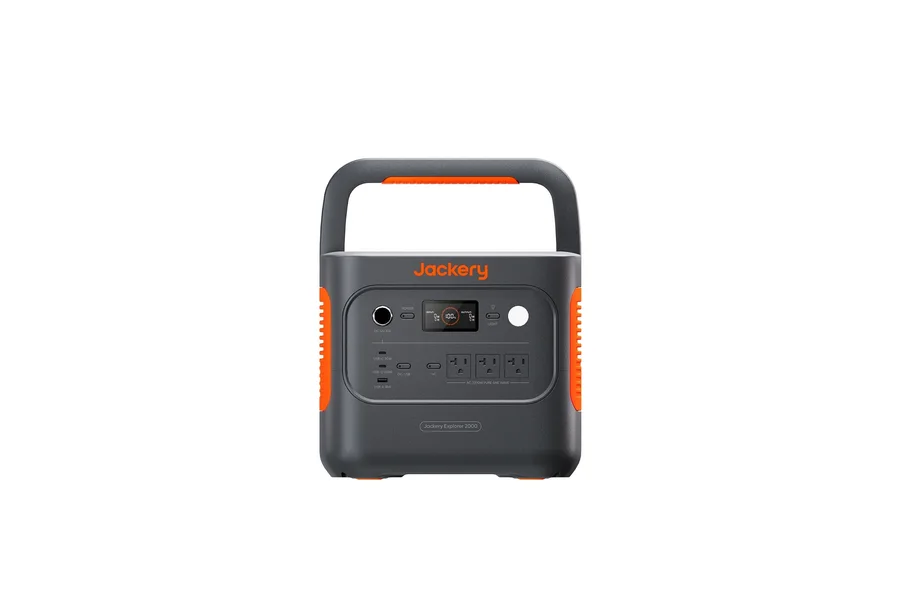
Jackery Explorer 2000 v2
- Battery capacity
- 2,042 Wh
- Continuous AC output
- 2,200 W
- Rated surge / peak
- 4,400 W
- AC voltage
- 120V
Power station calculator
Add the appliances you run in an RV, camper or van — refrigerator, lights, fan, laptop, Starlink, CPAP and more — to estimate your daily watt-hours and the portable power station capacity you need.
Enter the hours each device runs in a typical day, and set Number of days in Backup settings to your trip length. Results are planning estimates, not a guarantee.
Daily usage
920 Wh
Total energy per day
Recommended capacity
1,353 Wh
Shop around 1,500 Wh
Estimated runtime
27 hours
For a 1,500 Wh unit
You're all set. A 1,500 Wh power station covers your 920 Wh/day with the 20% reserve and 85% inverter efficiency you set. Adjust your devices or usage to see it change.
Edit any value — the summary updates as you type.
Example values for RV, camper and van use only. Actual wattage and daily run time vary by appliance, model, temperature and how you camp. A 12V compressor fridge cycles on and off, so its hours reflect equivalent compressor-on time, not 24 hours. Measure your own gear with a plug-in or inline watt meter where you can.
The defaults suit most people. Adjust them if your situation is different.
Recommendation
Your estimate points to roughly the 2,000Wh class. Compare the units below on the specs that decide whether one will run your devices.
Your estimate is around 2,000Wh, which suits longer runtimes or heavier loads.
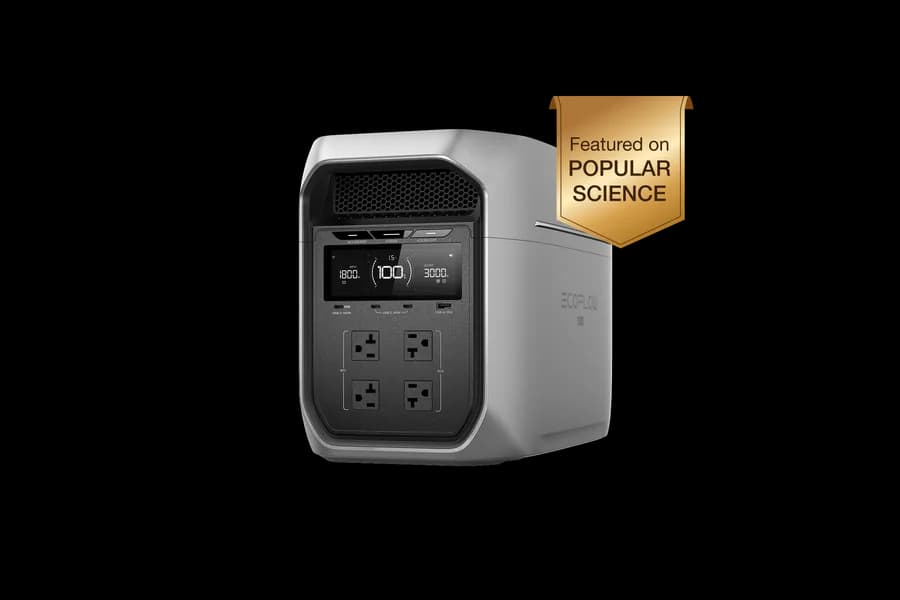
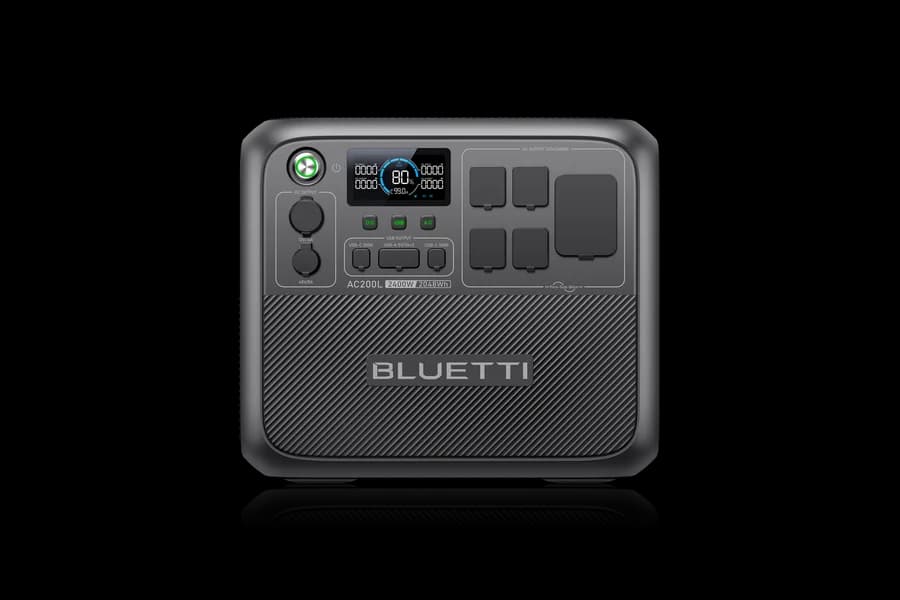
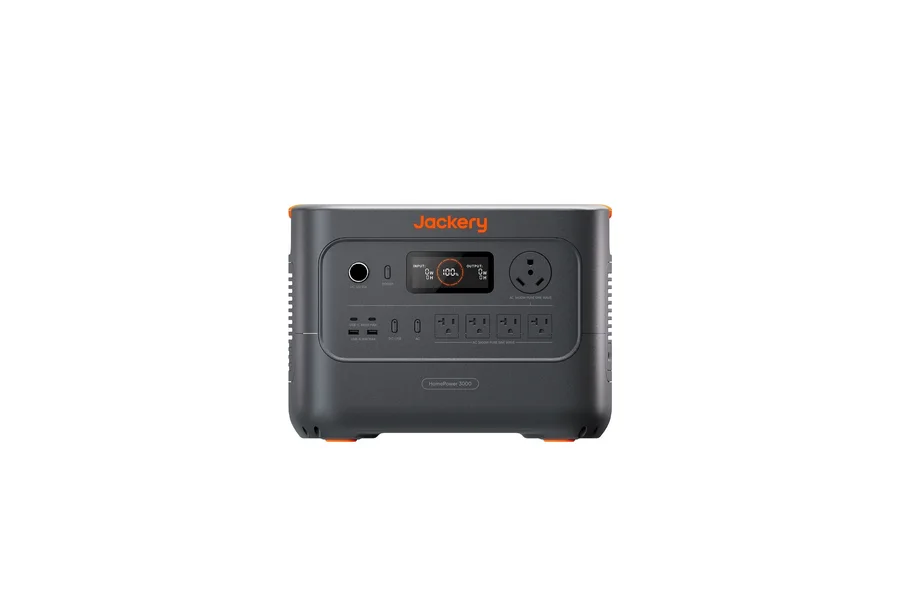

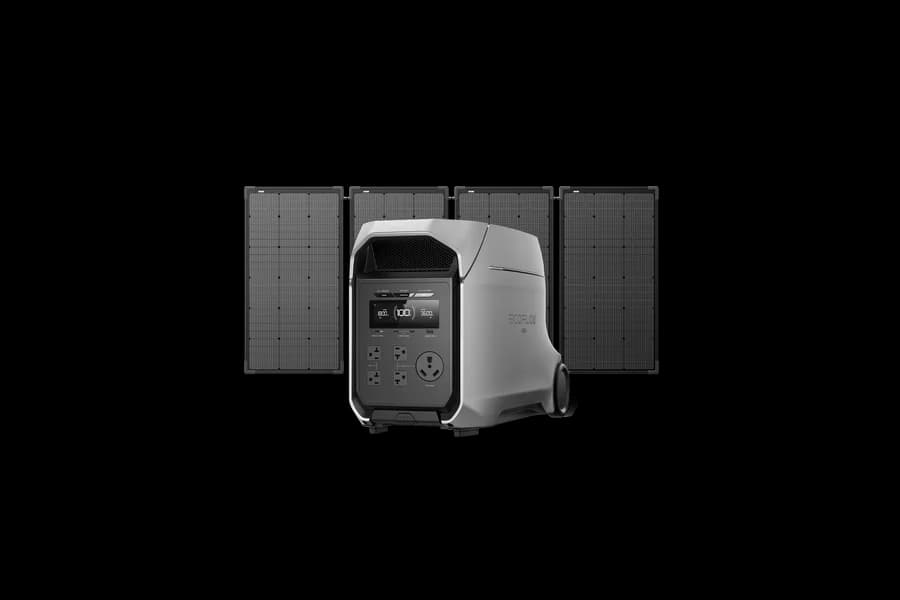
Capacity class is a starting point only. Specs shown are the manufacturer's published, per-model figures; prices and availability change, so confirm the actual unit's specifications — usable capacity, continuous and surge output, AC voltage, and maximum charge input — on the retailer's page against the devices you plan to run before buying.
Disclosure: Some links in this section are affiliate links. Your purchase price stays the same, and this site may earn a referral commission if you buy through them.
As an Amazon Associate I earn from qualifying purchases.
List the appliances you actually run in the RV, camper or van and, for each one, the watts it draws and the hours it runs in a typical day. The calculator adds up the watt-hours, then adjusts for inverter losses and the battery reserve you keep to suggest a minimum capacity and a size class.
Set Number of days in Backup settings to the length of your trip — 2 for a weekend, 3 or more for a longer stay — or leave it at 1 to size a single day and plan to recharge. A 12V compressor fridge cycles on and off, so enter its equivalent compressor-on hours (often 8–14 per day depending on heat and how often the door opens) rather than 24.
Every figure here is a planning estimate, not a guarantee. Replace the example wattages with the numbers on your own appliance labels or, better, a plug-in or inline watt-meter reading. To check how long one specific power station would last against your load, use the Power Station Runtime Calculator.
It depends on which appliances you run and for how long each day. The method is the same as the main Power Station Size Calculator: add up each device's daily watt-hours, then add headroom for inverter conversion loss and the reserve you leave on the battery.
A light setup — LED lights, a roof vent fan, phone charging and a laptop — often totals only 300–600 Wh a day, so a 500 Wh to 1,000 Wh unit can cover a day. Add a 12V compressor fridge and the daily total usually climbs to roughly 1,000–1,800 Wh, which points at a 1,500 Wh or larger power station for a full day of dry camping. Run Starlink all day, or add several devices at once, and a 2,000 Wh or larger unit is more realistic.
For multi-day trips you either scale the capacity up with the day count or plan to recharge from solar or the vehicle alternator. If your main concern is riding out grid failures at home rather than dry camping, the Home Power Outage Calculator covers that case, and for tent or car camping with packable gear rather than a built-in setup, see the Camping Power Station Calculator.
Rough daily watt-hours for common RV, camper and van loads, before inverter efficiency and battery reserve are applied. Enter your own appliances in the calculator above for a tailored number.
| Appliance | Watts | Hours/day | Qty | Daily energy |
|---|---|---|---|---|
| 12V RV refrigerator | 45 W | 12 | 1 | 540 Wh |
| LED light bulb | 10 W | 5 | 4 | 200 Wh |
| Roof vent fan | 30 W | 6 | 1 | 180 Wh |
| Water pump | 50 W | 1 | 1 | 50 Wh |
| Phone charging | 8 W | 3 | 2 | 48 Wh |
| Laptop | 65 W | 4 | 1 | 260 Wh |
| TV (12V) | 40 W | 3 | 1 | 120 Wh |
| CPAP (no humidifier) | 40 W | 8 | 1 | 320 Wh |
| Starlink | 75 W | 8 | 1 | 600 Wh |
| Coffee maker | 1000 W | 0.25 | 1 | 250 Wh |
Example values only. Actual wattage, duty cycle and startup surge vary by model, temperature, battery age and how you camp. The coffee maker row shows why a short burst of a high-wattage appliance still needs a power station with enough continuous AC output, not just watt-hours.
1,000 Wh delivers roughly 650–800 Wh usable after inverter loss and a reserve. That suits lights, a fan, phone and laptop charging, a CPAP overnight, and a small 12V fridge for part of a day. It is a common choice for weekenders who also have solar, and it stays light enough to move around easily.
2,000 Wh gives around 1,300–1,600 Wh usable, generally enough for a 12V fridge plus the small essentials for a full day of dry camping, or the essentials alone across a two to three day trip. Many units in this class also have higher continuous AC output, which helps with occasional larger loads.
3,000 Wh and larger, often with expandable batteries, is for running Starlink all day alongside a fridge and other electronics, longer stays between recharges, or heavier occasional AC use. The trade-off is weight, bulk and cost.
These are starting points. Put your real appliance list and trip length into the calculator above, and always confirm the specific unit's usable capacity, continuous output and maximum charge input.
RV refrigerator power consumption. A 12V compressor fridge or cooler typically draws 40–60 watts while the compressor runs, and it cycles on and off. Over a day that often works out to roughly 400–800 Wh, though a hot afternoon or a full fridge raises it. Absorption (three-way) fridges running on electric are far less efficient and are usually left on propane when off-grid. The Refrigerator Power Station Calculator goes into compressor cycling and startup surge in more detail.
Running Starlink from a portable power station. Yes, this is common in RVs. A standard dish draws around 50–75 watts in normal use, so eight hours is roughly 400–600 Wh and a full 24 hours is closer to 1,200–1,800 Wh. The Starlink Power Station Calculator breaks down AC versus DC power setups.
Running a CPAP in an RV. Also common. Without a heated humidifier a CPAP draws about 30–60 watts, so a night is roughly 200–400 Wh — one of the cheaper loads to back up. Turning off the heated humidifier and heated tube, or running the machine on 12V DC, cuts that further. See the CPAP Power Station Calculator for humidifier and DC details.
Heating the bed on a cold night. An electric blanket usually draws far less than heating the whole rig with a space heater, because it warms the person and bedding directly — often tens of watts — and a 12V version bypasses the inverter. A full night is still a few hundred watt-hours off the house bank, and some blanket manuals do not allow inverter power, so check the manual and plan it against your capacity — the Electric Blanket Power Station Calculator sizes the overnight load.
This calculator sizes energy capacity in watt-hours. It does not check whether a power station can physically start or sustain a given appliance. Battery capacity (watt-hours) and a power station's inverter rating (continuous watts, plus a short surge rating) are separate specifications, and high-draw appliances are limited by the second one.
For an RV air conditioner, microwave, electric kettle, hair dryer, induction cooktop, toaster or coffee maker, always check two things on the power station before relying on it:
The Coffee Maker Power Station Calculator covers an RV coffee maker on its own, from its electrical input watts, the Electric Kettle Power Station Calculator does the same for an RV kettle, the Hair Dryer Power Station Calculator covers an RV hair dryer, the Air Fryer Power Station Calculator covers an RV air fryer, the Induction Cooktop Power Station Calculator covers an RV induction cooktop, the Toaster Oven Power Station Calculator covers an RV toaster oven, and the Rice Cooker Power Station Calculator covers an RV rice cooker, and the Slow Cooker Power Station Calculator covers an RV slow cooker, where the long runtime rather than the wattage sizes the battery.
Because a reliable surge result depends on the exact appliance and power station, this page deliberately does not calculate one. Treat high-wattage appliances as short-burst loads, read both the appliance label and the power station spec sheet, and confirm compatibility with the manufacturer before you depend on it. For an RV or portable air conditioner specifically, the Air Conditioner Power Station Calculator sizes battery capacity and reports the continuous and surge output it needs, the Microwave Power Station Calculator does the same for an RV microwave from its electrical input watts, and the Electric Heater Power Station Calculator covers an electric heater's watts and how fast it drains a battery.
On trips longer than a day, most people top a power station back up rather than carry enough battery for the whole stay. A portable or roof-mounted solar panel replaces some of what you use each day, so the battery only has to cover the overnight hours and the gap on cloudy days.
Real solar output is well below the panel's rating once you account for weather, shade, panel angle, temperature and the final slow stretch of charging, so plan for partial recharges and keep a reserve as a buffer. The Solar Charge Time Calculator estimates how long a given panel takes to refill a unit, and the Solar Panel Size Calculator works out how many watts of panel you need to keep pace over a set number of days of camping.
A common dry-camping day: a 12V fridge (45 W, ~12 equivalent compressor hours), three LED bulbs (10 W, 5 h), a roof vent fan (30 W, 6 h), two phones charging (8 W, 3 h) and a laptop (65 W, 4 h).
Those add up to 1,178 Wh of energy for one day. After 85% inverter efficiency that is about 1,386 Wh, and keeping a 20% reserve brings the recommended minimum to roughly 1,732 Wh — which rounds up to a 2,000 Wh power station for a single day. A two-day weekend without recharging roughly doubles that; adding all-day Starlink pushes it up another 1,000 Wh or so per day.
Add up the daily watt-hours of the appliances you run in the RV, then add headroom for inverter losses and a battery reserve. A light setup of LED lights, a roof fan, and phone and laptop charging is often only 300 to 600 Wh a day, which a 500 to 1,000 Wh unit can cover. Adding a 12V compressor fridge usually brings the daily total to roughly 1,000 to 1,800 Wh, pointing at a 1,500 Wh or larger power station for a full day of dry camping. Use the calculator above with your own appliance list for a specific figure.
It varies widely with the setup. A minimal weekender running lights, a fan, and device charging might use 200 to 500 Wh a day. A typical van or camper with a 12V fridge, lights, a fan, water pump, and laptop use lands around 800 to 1,500 Wh. Add all-day Starlink, a TV, and longer device use and it can exceed 2,500 Wh. The refrigerator is usually the single largest continuous load.
A 1,000 Wh power station has roughly 650 to 800 Wh usable after inverter loss and a reserve. Against a light load of lights, a fan, and charging (say 40 to 60 watts average) that is well over 10 hours. Running a 12V fridge that averages around 30 watts alongside smaller loads, it is often most of a day. It generally will not carry a fridge plus Starlink and other electronics through a full 24 hours without recharging.
For most one to two day trips, yes. A 2,000 Wh unit provides around 1,300 to 1,600 Wh usable, which typically covers a 12V fridge plus lights, a fan, water pump, and device charging for a full day, or the smaller loads alone for two to three days. It may fall short if you run an air conditioner, a microwave, or all-day Starlink on top of everything else, or if you camp for several days with no solar.
Estimate one day of use with the calculator above, then set Number of days to 2. As a rough guide, a fridge plus small essentials at around 1,000 to 1,500 Wh per day works out to a recommended minimum near 2,500 to 3,500 Wh for a two-day weekend with no recharging. Bringing a solar panel lets you use a smaller unit, since it replaces part of each day's use.
Yes, this is a common RV setup. A standard Starlink dish draws around 50 to 75 watts in normal use, so eight hours is roughly 400 to 600 Wh and a full 24 hours is closer to 1,200 to 1,800 Wh. Powering it through a DC setup rather than the AC brick avoids some conversion loss. Size the power station for Starlink plus everything else you run at the same time, not Starlink alone.
Yes. Without a heated humidifier a CPAP typically draws 30 to 60 watts, so one night is roughly 200 to 400 Wh, making it one of the least demanding loads to back up. Turning off the heated humidifier and heated tube, or running the machine on 12V DC, reduces that further. Follow your equipment supplier's guidance for medical-necessity power.
Only if its inverter can supply the appliance's continuous wattage and handle the startup surge, and even then only briefly. An RV air conditioner or a 1,000 watt microwave is a high-draw load limited by the power station's output rating, not just its watt-hours. This calculator sizes energy capacity and does not check surge compatibility, so treat these as short-burst loads and confirm the power station's continuous and surge ratings against the appliance label.