BLUETTISmallest that fits

BLUETTI Elite 300
- Battery capacity
- 3,014 Wh
- Continuous AC output
- 2,400 W
- Rated surge / peak
- Not listed
- AC voltage
- 120V
Power station calculator
Estimate how long a power station will run your device from its capacity in watt-hours, the device's wattage, inverter efficiency, and the battery reserve you want to keep.
Enter your device and settings below, then pick a power station size in the runtime estimator to see the approximate hours it would last.
Daily usage
1,440 Wh
Total energy per day
Recommended capacity
2,118 Wh
Shop around 3,000 Wh
Estimated runtime
34 hours
For a 3,000 Wh unit
You're all set. A 3,000 Wh power station covers your 1,440 Wh/day with the 20% reserve and 85% inverter efficiency you set. Adjust your devices or usage to see it change.
Edit any value — the summary updates as you type.
Example wattages for continuous-use estimates only — actual draw varies by model, settings, and conditions. Measure your device with a plug-in watt meter for the most accurate figure.
The defaults suit most people. Adjust them if your situation is different.
Recommendation
Your estimate points to roughly the 3,000Wh+ class. Compare the units below on the specs that decide whether one will run your devices.
Your estimate is above 2,000Wh, where larger and expandable systems become relevant.
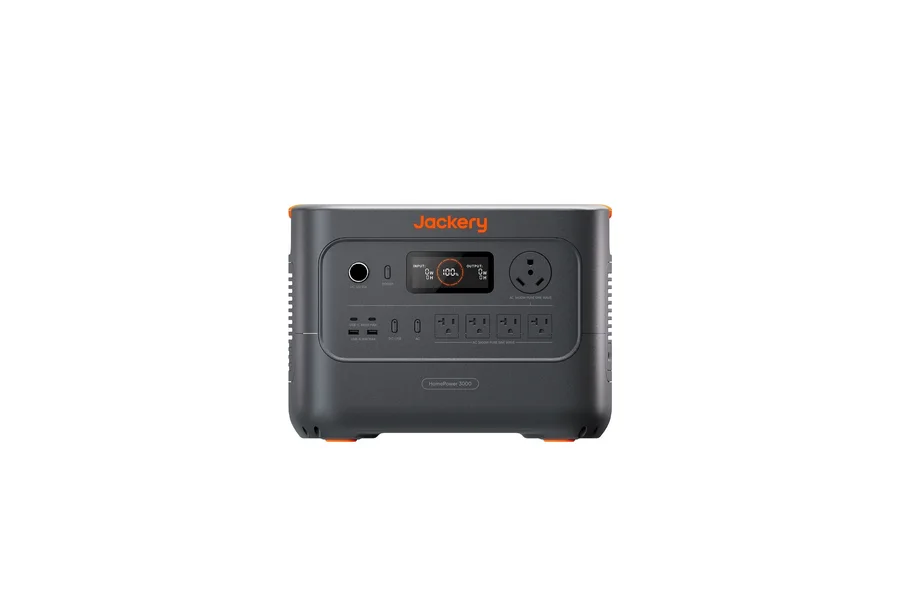
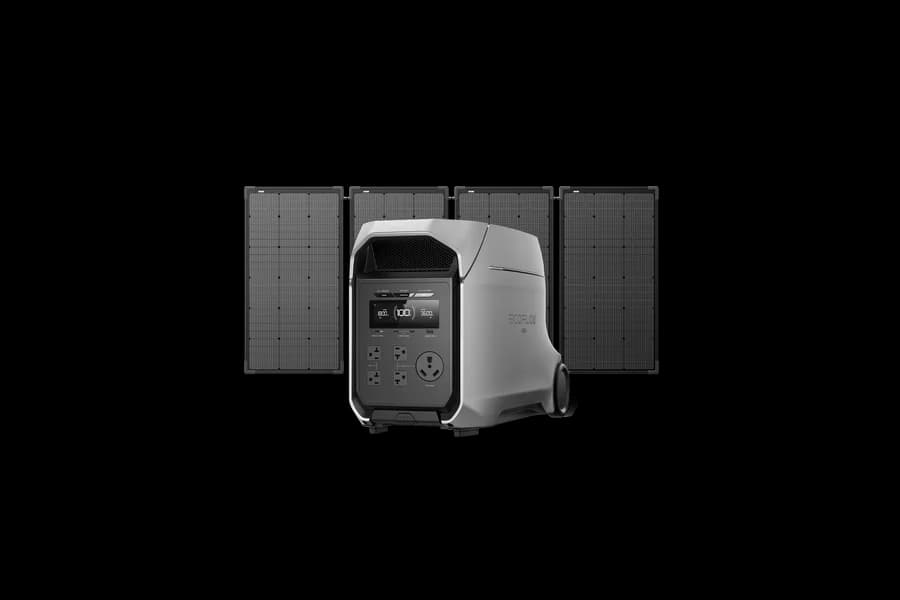
Capacity class is a starting point only. Specs shown are the manufacturer's published, per-model figures; prices and availability change, so confirm the actual unit's specifications — usable capacity, continuous and surge output, AC voltage, and maximum charge input — on the retailer's page against the devices you plan to run before buying.
Disclosure: Some links in this section are affiliate links. Your purchase price stays the same, and this site may earn a referral commission if you buy through them.
As an Amazon Associate I earn from qualifying purchases.
A runtime estimate assumes your device draws a steady, average amount of power for the whole time it runs. Real devices vary — a refrigerator cycles its compressor on and off, a laptop draws more while charging than when topped up, and motors briefly pull several times their rated watts at startup. This calculator estimates how long the stored energy lasts; it doesn't check whether a power station's inverter can handle a device's starting surge. Check your device's label for its running and starting wattage, and your power station's continuous and surge output ratings, before relying on either number.
1,000 Wh ÷ 60 W = 17 hours
That 17 hours figure is the simple formula: battery capacity divided by device wattage. It assumes every stored watt-hour reaches the device, which never quite happens. Applying this calculator's defaults (85% inverter efficiency and a 20% reserve left unused), the same 1,000 Wh power station running a steady 60-watt load works out to about 11 hours. Enter your own capacity, wattage, efficiency, and reserve in the calculator above for a number matched to your setup.
The starting point is one line: runtime (hours) = battery capacity (Wh) ÷ device power draw (W). A 1,000 Wh power station running a 100-watt device works out to roughly 10 hours on paper. Halve the wattage and the runtime doubles; double the wattage and it halves.
That version is useful for a quick gut check, but it quietly assumes every watt-hour in the battery reaches your device. In practice you divide usable capacity by the device's average draw: runtime = (capacity × inverter efficiency × usable fraction) ÷ average watts. The usable fraction is 1 minus whatever reserve you keep — a 20% reserve leaves 0.8. The calculator above applies both adjustments for you once you enter a capacity, wattage, efficiency, and reserve percentage.
Several real-world factors pull actual runtime below the simple capacity-divided-by-watts number:
A reasonable rule of thumb is that real runtime lands somewhere around 80 to 90% of the naive figure for a steady electronic load, and less for motor- or heat-driven devices. The calculator above builds the two largest factors — efficiency and reserve — directly into its estimate.
The watt-hour number on the box is the rated capacity — the energy in the cells when full. What actually reaches your devices is smaller. Subtract inverter conversion loss, any reserve you choose to keep, and a little standby overhead, and a 1,000 Wh power station commonly delivers somewhere around 650 to 800 Wh of real AC output.
Enter capacity in the calculator as the rated figure and let the efficiency and reserve fields scale it down, or enter a measured usable figure directly and set efficiency to 100% with a 0% reserve. Some manufacturers publish a separate "usable capacity" or a real-world runtime chart for a given load — those are worth checking against your own estimate.
Battery chemistry matters at the margins too: lithium iron phosphate (LiFePO₄) packs tolerate deeper discharges and far more cycles than older lithium-ion designs, so owners often run them with a smaller reserve.
Runtime is only as accurate as the wattage you feed it, and the number printed on a device is often its maximum rather than what it actually uses. A few ways to get closer to the real figure:
If your device can run on DC directly — many fridges, fans, and CPAP machines can — powering it from a 12V outlet skips the inverter and its conversion loss, which stretches runtime compared with the same device on an AC outlet.
Estimated continuous runtime at this calculator's defaults (85% inverter efficiency, 20% reserve). Devices that cycle on and off, like refrigerators, will run longer in practice than a steady-draw estimate suggests.
| Device | Power draw | 500 Wh | 1,000 Wh | 2,000 Wh |
|---|---|---|---|---|
| Wi-Fi router + modem | 12 W | 28 hours | 2.4 days | 4.7 days |
| CPAP machine (no humidifier) | 40 W | 8.5 hours | 17 hours | 34 hours |
| Portable 12V fridge / freezer | 45 W | 7.6 hours | 15 hours | 30 hours |
| Mini fridge (average draw) | 55 W | 6.2 hours | 12 hours | 25 hours |
| Laptop | 65 W | 5.2 hours | 10 hours | 21 hours |
| 55-inch LED TV | 90 W | 3.8 hours | 7.6 hours | 15 hours |
Example wattages only. Actual power draw varies by brand, model, and settings — measure your own device with a plug-in watt meter for the most accurate estimate.
A 500 Wh power station holds roughly 340 to 400 Wh of usable AC energy. That's about a full night for a CPAP without a humidifier, most of a workday for a laptop and phone, or several hours for a small TV. It generally isn't enough for a full-size refrigerator overnight.
A 1,000 Wh power station delivers around 680 to 800 Wh usable — one to two CPAP nights, a full day of light electronics, or roughly half a day to a day of a mini fridge depending on its cycling.
A 2,000 Wh power station gives roughly 1,350 to 1,600 Wh usable, which stretches to multiple days for low-wattage devices or about a day of a full-size refrigerator. High-wattage appliances — space heaters, kettles, hair dryers, air conditioners — still only run for tens of minutes to a couple of hours regardless of the size class, because their draw is measured in the hundreds or thousands of watts.
These are starting points. Enter the specific capacity and wattage into the calculator above for a figure that reflects your own hardware and settings.
When more than one device is plugged in, add their average wattages together and divide usable capacity by that combined figure. A 60-watt fridge plus a 12-watt router plus a 20-watt fan is a 92-watt load, so a 1,000 Wh power station with about 700 Wh usable lasts roughly seven to eight hours rather than the longer time any one device would get alone.
To estimate a mixed load without doing the arithmetic by hand, open the Power Station Size Calculator on the homepage, add every device with its wattage and hours, and use the built-in runtime estimator. It totals the watt-hours and applies the same efficiency and reserve settings shown here.
If you're sizing rather than stretching, the Power Station Size Calculator works the problem in the other direction — from the runtime you need to the capacity to buy. Device-specific guides are also available for refrigerators, CPAP machines, and Starlink.
Start with battery capacity in watt-hours divided by your device's power draw in watts. A 1,000 Wh power station running a 100-watt device is about 10 hours on paper. For a realistic number, divide usable capacity instead: multiply the rated capacity by inverter efficiency (around 0.85) and by the fraction you're willing to discharge (0.8 if you keep a 20% reserve), then divide by the device's average watts. The calculator above does this once you enter the four values.
The simple formula assumes every stored watt-hour reaches the device. In reality, inverter conversion loses 10 to 20%, any reserve you keep is capacity you don't spend, the unit's own electronics draw a few watts of standby, cold weather reduces battery output, and older batteries hold less than their original rating. Motor and heating devices also spike well above their rated watts, which a steady-average estimate can't capture.
Rated capacity is the energy in the cells when full — the number on the box. Usable capacity is what actually reaches your devices after inverter loss, reserve, and standby overhead. A 1,000 Wh power station commonly delivers around 650 to 800 Wh of real AC output. Some manufacturers publish a usable figure or a runtime chart separately.
It depends entirely on the load. A 1,000 Wh power station has roughly 680 to 800 Wh usable, which is one to two nights for a CPAP, a full day of a laptop and phone, or half a day to a day of a mini fridge. A 1,000-watt appliance like a kettle or heater would run under 45 minutes. Enter your device's wattage in the calculator above for a specific number.
Yes. At 85% efficiency you lose 15% of the battery to conversion before the device sees any of it — on a 1,000 Wh unit that's 150 Wh, often an hour or more of runtime for a small load. Running a compatible device directly on 12V DC avoids that loss. Check your power station's spec sheet for its rated efficiency and adjust the field above if it differs from the 85% default.
The reserve is the portion of the battery you deliberately don't use, to protect its lifespan and keep a buffer. A 20% reserve means only 80% of capacity is available, so runtime drops by about a fifth compared with a full discharge. Set the reserve field to match how deeply you're comfortable draining the battery.
A refrigerator's compressor only runs part of each hour, so its average draw is well below its running watts. Use a measured average from a watt meter, or its energy-guide daily kWh figure divided by 24, rather than assuming it runs continuously. The refrigerator-specific calculator covers compressor cycling and startup surge in more detail.
Not for long on any portable power station. A 1,500-watt heater draws energy so fast that even a 2,000 Wh unit lasts around an hour. High-wattage resistive appliances are best treated as short-burst loads, not something to run for hours off battery.
Recharge it with solar so input keeps pace with draw, run devices on DC where possible to skip inverter loss, use the unit's eco or power-saving mode to cut idle drain, lower the load itself, and keep the battery near room temperature. Spending more of the reserve also adds runtime but trades against long-term battery health.