BLUETTISmallest that fits

BLUETTI Elite 300
- Battery capacity
- 3,014 Wh
- Continuous AC output
- 2,400 W
- Rated surge / peak
- Not listed
- AC voltage
- 120V
Power station calculator
Add the essentials you want to keep running during a blackout — refrigerator, Wi-Fi, lights, CPAP, phones and more — to estimate the portable power station capacity and runtime you need.
Enter the hours you expect each device to run during the outage, and set Number of days in Backup settings to how long you want to cover. Results are planning estimates, not a guarantee.
Daily usage
1,688 Wh
Total energy per day
Recommended capacity
2,482 Wh
Shop around 3,000 Wh
Estimated runtime
29 hours
For a 3,000 Wh unit
You're all set. A 3,000 Wh power station covers your 1,688 Wh/day with the 20% reserve and 85% inverter efficiency you set. Adjust your devices or usage to see it change.
Edit any value — the summary updates as you type.
Example values for outage planning only. Actual wattage and how long you run each device during an outage vary by model and situation. Refrigerator hours reflect compressor cycling, not 24 hours of continuous running.
The defaults suit most people. Adjust them if your situation is different.
Recommendation
Your estimate points to roughly the 3,000Wh+ class. Compare the units below on the specs that decide whether one will run your devices.
Your estimate is above 2,000Wh, where larger and expandable systems become relevant.
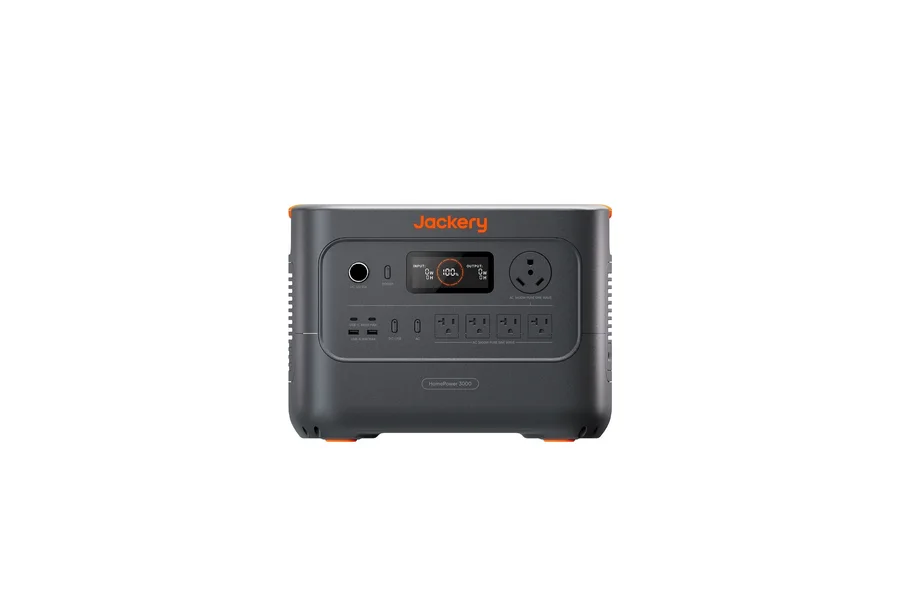
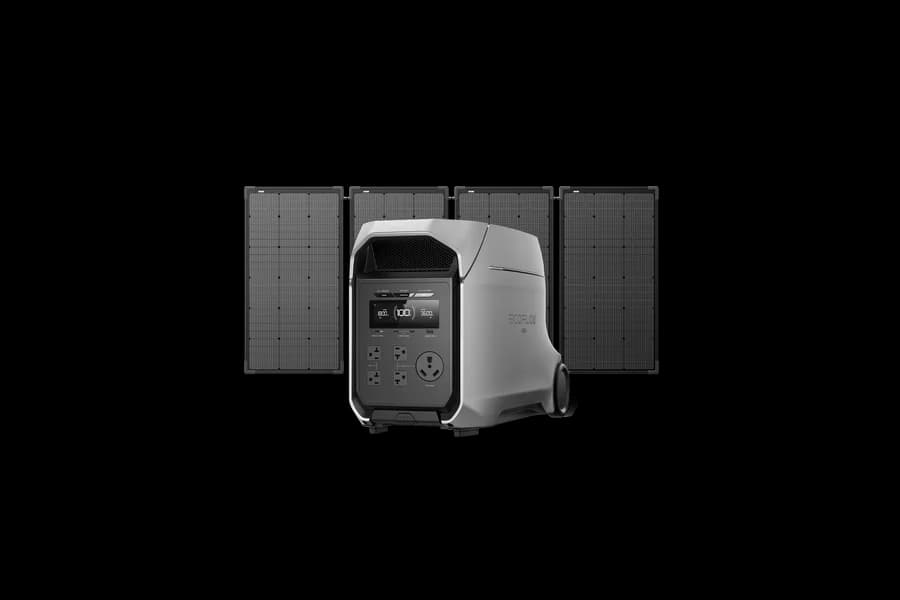
Capacity class is a starting point only. Specs shown are the manufacturer's published, per-model figures; prices and availability change, so confirm the actual unit's specifications — usable capacity, continuous and surge output, AC voltage, and maximum charge input — on the retailer's page against the devices you plan to run before buying.
Disclosure: Some links in this section are affiliate links. Your purchase price stays the same, and this site may earn a referral commission if you buy through them.
As an Amazon Associate I earn from qualifying purchases.
This calculator adds up the watt-hours your chosen devices use, then adjusts for inverter losses and the battery reserve you keep to suggest a minimum capacity and a size class. It is a planning estimate, not a guarantee. Enter the hours you expect each device to run during the outage rather than assuming everything runs continuously — a refrigerator in particular cycles its compressor on and off, so a figure of roughly 8 equivalent hours per 24-hour day is closer to reality than 24. The calculator estimates stored energy only; it does not check whether a power station's inverter can start a refrigerator or other motor load. Check each device's running and starting wattage on its label, and the power station's continuous and surge output ratings, before relying on either number.
A refrigerator (150 W, ~8 equivalent compressor hours), a Wi-Fi router (12 W, 24 h), four LED bulbs (10 W, 5 h) and two phones charging (8 W, 3 h) come to about 1,736 Wh of energy for a 24-hour outage.
After 85% inverter efficiency that is about 2,042 Wh, and keeping a 20% reserve brings the recommended minimum to roughly 2,553 Wh — which rounds up to a 3,000 Wh power station. Doubling the day count for a 48-hour outage roughly doubles the capacity you need, unless you can recharge partway through.
There is no single answer, because it depends on which devices you want to keep running and for how long. The method is always the same: list each essential, estimate its wattage and how many hours it will actually run during the outage, add up the watt-hours, then add headroom for inverter losses and the reserve you keep on the battery. The calculator above does this for you and maps the result to a rough capacity class.
As a rough guide, keeping phones, Wi-Fi and a few lights going for a day needs only a few hundred watt-hours, so a 300–500 Wh unit can be enough. Add a refrigerator and the daily total usually climbs past 1,500 Wh, which points at a 2,000 Wh or larger power station for a full 24 hours. Multi-day outages either need a much larger unit or a way to recharge, such as solar panels.
For one device in isolation, the main Power Station Size Calculator and the device-specific calculators can give a more focused estimate.
The calculator works in 24-hour days: it totals the watt-hours your devices use in a day, multiplies by the number of days, then adjusts for efficiency and reserve. For a 24-hour outage covering a refrigerator plus phones, Wi-Fi and lights, the recommended minimum is commonly in the 2,000–3,000 Wh range once losses and reserve are included — the worked example above lands near 2,550 Wh. A lighter load without a refrigerator can drop well under 1,000 Wh.
For an outage shorter or longer than a day, adjust the inputs like this:
| Outage length | How to set the calculator |
|---|---|
| 4 hours | Set Number of days to 1 and set each device's hours to about a sixth of a day (a refrigerator near 1.5 equivalent hours). |
| 8 hours | Number of days 1, with each device's hours set to roughly a third of a day (a refrigerator near 3 equivalent hours). |
| 12 hours | Number of days 1, with each device's hours at about half a day (a refrigerator near 4 equivalent hours). |
| 24 hours | Number of days 1, using full-day hours for each device (a refrigerator near 8 equivalent compressor hours). |
| 48 hours | Set Number of days to 2 and keep the same per-day hours, or enter the devices once and double the day count. |
These are planning approximations. A refrigerator's compressor runs more often in a warm room or when the door is opened frequently, so use a measured average where you can.
Portable power stations have a limited budget of watt-hours, so it helps to rank devices by how essential they are and how much energy they draw:
Add the devices in that order in the calculator above and watch the recommended capacity climb, so you can see where your own cutoff sits.
A typical residential refrigerator draws roughly 100–250 watts while the compressor runs, but the compressor is only on for part of each hour. Averaged over a day that often works out to around 1,000–1,500 Wh. On that basis a 1,000 Wh power station might cover somewhere near half a day to a day, a 2,000 Wh unit around a day and a half, and a 3,000 Wh unit two days or more — before accounting for anything else you plug in.
Startup surge matters too. The compressor motor briefly pulls several times its running wattage when it kicks in. Battery capacity in watt-hours and inverter output in watts are separate specs: a unit can have plenty of stored energy yet still trip on the surge. Check the refrigerator's starting wattage and the power station's surge rating before relying on it.
The Refrigerator Power Station Calculator covers compressor cycling and surge in more detail, and the Power Station Runtime Calculator estimates hours for a specific unit and load.
A 1,000 Wh power station delivers roughly 650–800 Wh of usable energy after inverter loss and a reserve. That is a good match for phones, a Wi-Fi router, lights, a laptop and a CPAP for a night, and it can nurse a small or efficient refrigerator through part of a day. It is generally not enough to carry a full-size refrigerator plus other loads through a whole 24-hour outage.
A 2,000 Wh unit provides around 1,300–1,600 Wh usable, which is usually enough for a refrigerator plus the small essentials for a day, or the small essentials alone for two to three days. It is heavier and costs more, and many 2,000 Wh units have a higher continuous and surge output, which helps with a refrigerator's startup.
If your must-run list includes a refrigerator, the 2,000 Wh class is the safer starting point; if it is phones, Wi-Fi, lights and a CPAP, 1,000 Wh often covers it. Run your own device list through the calculator above to see which side of the line you fall on, and confirm the specific unit's usable capacity and output ratings.
Every figure this calculator produces is an estimate, not a guarantee. The result assumes each device draws a steady, average wattage for the hours you enter, and that the battery delivers close to its rated capacity. Real outages rarely match that exactly.
Treat the recommended capacity as a floor to shop above, keep some extra margin, and test your setup before you have to depend on it.
Past a day or two, buying enough battery to ride out the whole outage gets expensive and heavy. Pairing a mid-size power station with a solar panel is a common alternative: the panel replaces some of what you use each day, so the battery only has to cover the gap and the overnight hours.
Solar output swings with weather, shade, panel angle and daylight, so plan for partial rather than full recharges and keep a reserve as a buffer. The Solar Charge Time Calculator estimates how long a given panel takes to refill a unit, and the Solar Panel Size Calculator works out how many watts of panel you need to keep pace over a set number of days.
Rough daily watt-hours for a 24-hour outage, before inverter efficiency and battery reserve are applied. Enter your own devices in the calculator above for a tailored number.
| Device | Watts | Hours (outage) | Qty | Daily energy |
|---|---|---|---|---|
| Refrigerator | 150 W | 8 | 1 | 1,200 Wh |
| Chest freezer | 120 W | 8 | 1 | 960 Wh |
| Wi-Fi router + modem | 12 W | 24 | 1 | 288 Wh |
| LED light bulb | 10 W | 5 | 4 | 200 Wh |
| Phone charging | 8 W | 3 | 2 | 48 Wh |
| Laptop | 65 W | 4 | 1 | 260 Wh |
| TV | 100 W | 4 | 1 | 400 Wh |
| Box fan | 40 W | 8 | 1 | 320 Wh |
| CPAP (no humidifier) | 40 W | 8 | 1 | 320 Wh |
Example values only. Actual wattage, duty cycle and startup surge vary by model, temperature, age and usage.
It depends on which devices you want to run and for how long. Add up the watt-hours each device uses in a day (watts multiplied by the hours it actually runs), then add headroom for inverter losses and a battery reserve. Phones, Wi-Fi and a few lights for a day need only a few hundred watt-hours, so a 300 to 500 Wh unit can be enough. Adding a refrigerator usually pushes the daily total past 1,500 Wh, which points at a 2,000 Wh or larger power station for a full 24 hours. Use the calculator above with your own device list for a specific figure.
A residential refrigerator draws roughly 100 to 250 watts while the compressor runs, but it cycles on and off, so its average daily use is often around 1,000 to 1,500 Wh. On that basis a 1,000 Wh power station might last from half a day to a day, a 2,000 Wh unit around a day and a half, and a 3,000 Wh unit two days or more, before anything else is plugged in. The power station also needs an inverter rated to handle the compressor's startup surge, which is several times its running wattage.
For a light load of phones, Wi-Fi and lights, well under 1,000 Wh is usually enough for 24 hours. Add a refrigerator and the recommended minimum commonly lands in the 2,000 to 3,000 Wh range once inverter efficiency and a battery reserve are included. The calculator above totals your devices' daily watt-hours and applies those adjustments to give a number for your specific setup.
Prescribed medical equipment such as a CPAP comes first, and it usually draws little power. Food safety is next: a refrigerator or freezer run a few hours at a time. Then communication and safety, meaning phone charging, a Wi-Fi router and a few LED lights, which together use very little. Comfort loads like a fan, TV or laptop come last. Avoid high-wattage resistive appliances such as space heaters, kettles and air conditioners, which can drain a portable power station in under an hour.
A 1,000 Wh power station has roughly 650 to 800 Wh usable and suits phones, Wi-Fi, lights, a laptop and a CPAP for a night, plus partial refrigerator coverage. A 2,000 Wh unit has around 1,300 to 1,600 Wh usable, enough for a refrigerator plus small essentials for a day, and often has higher output for handling a refrigerator's startup. If a full-size refrigerator is on your must-run list, the 2,000 Wh class is the safer starting point.
Yes. A refrigerator's compressor briefly draws several times its running wattage when it starts. Battery capacity in watt-hours and inverter output in watts are separate specifications, so a power station can have enough stored energy but still trip on the surge. Check the refrigerator's starting wattage on its label and the power station's continuous and surge output ratings before relying on it.
The estimate assumes a steady average wattage and a battery that delivers its full rated capacity. In practice, cold weather lowers battery output, a warm room makes a refrigerator cycle more, older batteries hold less than their label, inverter conversion loses 10 to 20 percent, and the unit's own electronics draw standby power. Treat the recommended capacity as a floor to shop above and keep extra margin.
Yes, and past a day or two it is usually more practical than buying a very large battery. Solar panels are the common option: a panel replaces some of what you use each day so the battery only covers the gap and overnight hours. Solar output varies with weather and daylight, so plan for partial recharges. A vehicle 12V outlet or a fuel generator can also top up a power station.