BLUETTISmallest that fits

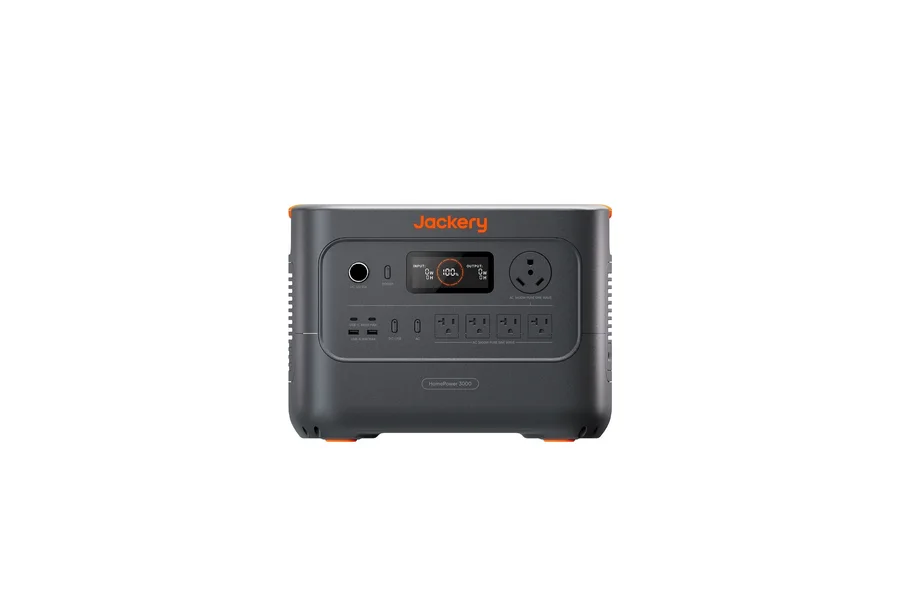
BLUETTI Elite 300
- Battery capacity
- 3,014 Wh
- Continuous AC output
- 2,400 W
- Rated surge / peak
- Not listed
- AC voltage
- 120V
Power station calculator
Work out three separate things a portable power station needs to run a household well pump during an outage: enough battery capacity in watt-hours, enough continuous AC output, and enough startup / surge capability — plus a check that the pump's voltage matches the unit.
Enter the running and starting watts from your pump's label or manual. Results are planning estimates, not a guarantee, and battery capacity alone does not confirm a unit can start the pump — especially for a 240V pump.
Enter the numbers from your pump's label, manual, or pressure-switch / controller documentation.
Pump run time
Backup settings
Example only — running watts 1,000, startup watts 2,500, 10 minutes/hour, 12-hour outage. Replace every field with your pump's actual specifications; these are not tied to a specific horsepower.
2,941 Wh
Recommended battery capacity after inverter efficiency and reserve. Look for a power station around 3,000 Wh — the 3,000Wh+ class.
Estimated pump energy use
2,000 Wh
Minimum before reserve
2,353 Wh
This is separate from battery capacity. A power station needs both.
You have not entered a startup / surge figure. Find it on your pump's label, its manual, or the pump / controller manufacturer's documentation before choosing a power station. A unit with plenty of battery capacity can still fail to start the pump if its inverter cannot supply the surge.
A power station can have enough battery capacity but still fail to start the pump if its inverter cannot supply the required startup power. Check the unit's rated continuous output and its surge / peak rating against the two numbers above.
Check whether your well pump is a 120V or 240V unit before buying anything.
This calculator sizes energy (Wh) and reports the output (W) you need. It does not check 120V versus 240V compatibility — enough watt-hours does not mean a 240V pump will run.
Recommendation
These 3,000Wh+-class units have a confirmed continuous AC output of at least 1000 W, plus enough battery capacity for this load.
Your estimate is above 2,000Wh, where larger and expandable systems become relevant.
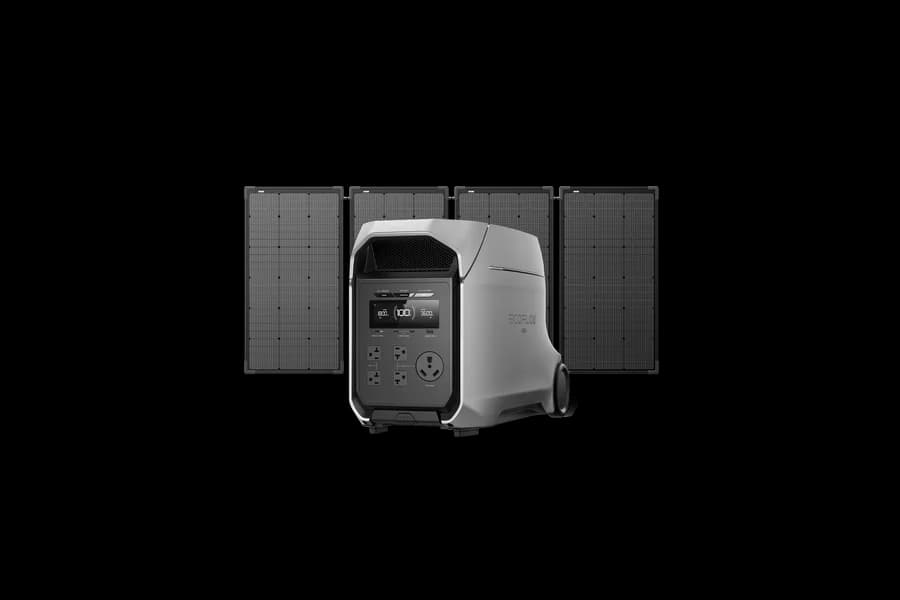
Capacity class is a starting point only. Specs shown are the manufacturer's published, per-model figures; prices and availability change, so confirm the actual unit's specifications — usable capacity, continuous and surge output, AC voltage, and maximum charge input — on the retailer's page against the devices you plan to run before buying.
Disclosure: Some links in this section are affiliate links. Your purchase price stays the same, and this site may earn a referral commission if you buy through them.
As an Amazon Associate I earn from qualifying purchases.
Capacity recommendations above are based on energy needs only. Before buying, verify each power station's continuous AC output, its startup / surge rating, its AC voltage (120V or 240V), and its outlet configuration against your pump's specifications — capacity class alone does not confirm that a unit can start and run your well pump.
A power station can have enough battery capacity but still fail to run a well pump. Battery capacity (watt-hours) sets how long a unit lasts; continuous and surge output (watts) and the AC voltage decide whether it can run the pump at all. This calculator sizes the watt-hours and reports the watts you need from the numbers you enter — it does not estimate a pump's wattage from its horsepower, and it does not check 120V versus 240V compatibility. Use the running and starting watts printed on your pump or its manual, and confirm the pump's voltage separately.
The energy side of this uses the same method as the main Power Station Size Calculator. For a well pump, two more specifications decide whether a unit can back it up, and it has to pass all of them:
A large battery behind a small inverter will not run the pump; a powerful inverter with a small battery starts it but drains fast; and the right watts at the wrong voltage does not help at all. The calculator above reports the watt-hours and the watts separately, and flags voltage as a check you must do yourself. To see how long a given unit lasts against a steady load, use the Power Station Runtime Calculator.
Running watts is the steady power a well pump draws while its motor turns and it is pushing water. It determines energy use over an outage and the continuous output a power station must sustain.
Startup, starting, or surge watts is a brief spike — often a fraction of a second — as the motor overcomes inertia and the system builds pressure. On a well pump it can be substantially higher than the running figure. A power station's inverter has to deliver that spike or the pump will not start, regardless of how much battery is behind it.
How much higher the startup figure is depends on the motor type, the pump, the controller, and the supply voltage, so this calculator does not estimate it. Both numbers are usually on the pump's rating label, in its manual, or in the pressure-switch or constant-pressure controller documentation. The same distinction applies to a sump pump, which has its own calculator.
Residential well pumps come in both 120-volt and 240-volt versions. Shallow-well jet pumps and smaller pumps are often 120V; many deeper-well submersible pumps, and most higher horsepower pumps, are 240V. Check the rating label, the pressure switch, or the manual to find which one you have — it is not something you can assume from the horsepower.
This matters more than it does for a sump pump, because it is a hard limit:
This page does not calculate transformers, split-phase wiring, or 120V-to-240V conversion. If your pump is 240V, confirm a candidate power station's 240V capability, outlet type, continuous watts, and surge rating before buying — watt-hours alone will not tell you whether it can run the pump.
Get the numbers from the source, not from a horsepower rule of thumb:
Horsepower — 1/2 HP, 3/4 HP, 1 HP, 1.5 HP — is a useful search term, but it does not give a reliable wattage. Two pumps with the same horsepower label can draw noticeably different running and starting watts depending on the motor, the pump design, the controller, and the supply voltage, so this calculator asks for the measured or spec-sheet numbers instead of converting from horsepower.
A well pump does not run continuously. It switches on when the pressure tank drops to the cut-in pressure, refills the tank in a minute or two, and switches off at cut-out. How much it runs over an hour depends on how much water the household uses — a few minutes with normal use, more with laundry, irrigation, or livestock.
That is why the calculator asks for minutes per hour rather than assuming the pump runs the whole outage. Multiplying running watts by the full outage length overestimates the energy needed. A pump drawing 1,000 watts that runs 10 minutes of each hour uses about 1000 × 10 / 60 = 167 Wh per hour, not 1,000 Wh.
Estimate a realistic busy case for your household during an outage, and remember that a larger pressure tank means fewer, longer pump cycles. The same on-and-off idea drives a sump pump; the Sump Pump Backup Power Calculator covers that case.
A pump with a spec sheet reading 1,000 W running and 2,500 W starting, expected to run about 10 minutes of each hour, backed up for a 12-hour outage. These are example figures — use your own pump's, and they are not tied to a particular horsepower.
1,000 W × 10 min × 12 h / 60 = 2,000 Wh
That 2,000 Wh is the pump's energy use before adjustments. After 85% inverter efficiency it is about 2,353 Wh, and keeping a 20% reserve brings the recommended battery capacity to roughly 2,941 Wh — the 3,000 Wh class.
Separately, the power station must supply at least 1,000 W continuously, handle a 2,500 W startup surge, and provide the pump's voltage (120V or 240V) in a usable outlet. A unit in the 3,000 Wh capacity class only clears the first requirement.
For energy alone, and only if the unit's output and voltage also suit the pump:
Put your pump's measured running and starting watts and a realistic minutes-per-hour into the calculator above, then confirm the unit's output ratings and voltage before buying.
A capacity class is an energy answer. It tells you a power station probably stores enough watt-hours for your outage. It does not tell you the unit can start and run the pump. Three things can still stop it:
Treat the recommended capacity class as the first filter, then read the unit's continuous output, surge rating, AC voltage, and outlet type against your pump's numbers. Only all four together confirm compatibility.
Check every item against your pump and your situation before buying:
A power station in the right capacity class is not confirmation that it can start and run your well pump. Only the continuous output, surge rating, and AC voltage, checked against your pump's own numbers, tell you that.
Size it on separate numbers. For battery capacity, multiply the pump's running watts by the fraction of each hour it runs and by the outage length, then add headroom for inverter losses and a reserve; a pump at 1,000 watts running 10 minutes an hour over a 12-hour outage works out to roughly 2,000 to 3,000 Wh of recommended capacity. For output, the power station must supply at least the pump's running watts continuously, handle its starting-watt surge, and provide the pump's voltage (120V or 240V) in a usable outlet. A unit that meets the capacity but not the output or voltage will not run the pump.
It varies widely by pump, motor, controller, and voltage, so use the figure on your pump's label, its manual, or the manufacturer's spec page rather than a horsepower estimate. Running watts for common residential pumps range broadly, and starting watts are higher. A watt meter on the pump's circuit, where practical, gives a measured running figure and an approximate surge.
When the motor starts, it briefly draws extra current to overcome inertia and build system pressure before settling to its steady running draw. That spike, called startup, starting, or surge watts, may last only a fraction of a second but must be supplied in full or the motor will not start. How much higher it is depends on the motor type, the pump, and the controller, which is why this calculator asks you to enter the starting figure rather than estimating it.
For energy, a 1,000 Wh unit with about 650 to 800 Wh usable can cover a few hours for a 120V pump running roughly 10 minutes per hour. Whether it can actually run the pump depends on its inverter: the continuous output must meet the pump's running watts and the surge rating must meet the starting watts. Many 1,000 Wh units fall short on surge for a motor, so confirm both ratings, and confirm the pump is 120V.
A 2,000 Wh unit, around 1,300 to 1,600 Wh usable, covers a longer outage or heavier water use, and units this size are more likely to have the surge headroom a pump motor needs, for a 120V pump. It is still not automatic: check the continuous and surge output figures against your pump's running and starting watts, and check the voltage.
Only if it provides a true 240V output in a form your pump can connect to. Many portable power stations output 120V only, and a 240V pump cannot be powered directly by a 120V-only unit no matter how large its battery. Some larger power stations offer 240V output, sometimes by combining two units. This calculator sizes energy and reports the watts you need; it does not check 120V versus 240V compatibility, so verify the pump's voltage and the unit's output before buying.
Check the rating label on the pump or motor for a starting, surge, or locked-rotor figure, look in the owner's manual, or read the specifications on the manufacturer's product page and the pressure-switch or controller documentation. If none of those list it, a watt meter with a peak-hold feature on the pump's circuit gives an approximation, though a very brief inrush can exceed what a meter captures. Do not rely on a horsepower-to-watts conversion.
Divide the power station's usable watt-hours by the pump's average hourly energy use. A pump at 1,000 watts running 10 minutes an hour averages about 167 Wh per hour, so a 1,000 Wh unit with roughly 700 Wh usable lasts about 4 hours, and a 2,000 Wh unit about 8 hours. Heavier household use that makes the pump run 20 minutes an hour cuts those times roughly in half. Cold, battery age, and the real inrush at each start shorten them further.
Not on its own. Horsepower ratings like 1/2 HP, 3/4 HP, 1 HP, and 1.5 HP are useful for searching, but two pumps with the same horsepower can draw noticeably different running and starting watts depending on the motor, pump design, controller, and voltage. Use the running and starting watts from your pump's label or manual, and its voltage, to choose a power station, not the horsepower figure.
Yes, if the power station accepts solar input and you have a panel. Solar can extend backup through a multi-day outage by replacing part of what the pump uses each day. Output drops in bad weather, so plan for partial recharges and keep a reserve. The solar charge-time and panel-size calculators on this site estimate how much panel you would need for a given daily use.