JackerySmallest that fits
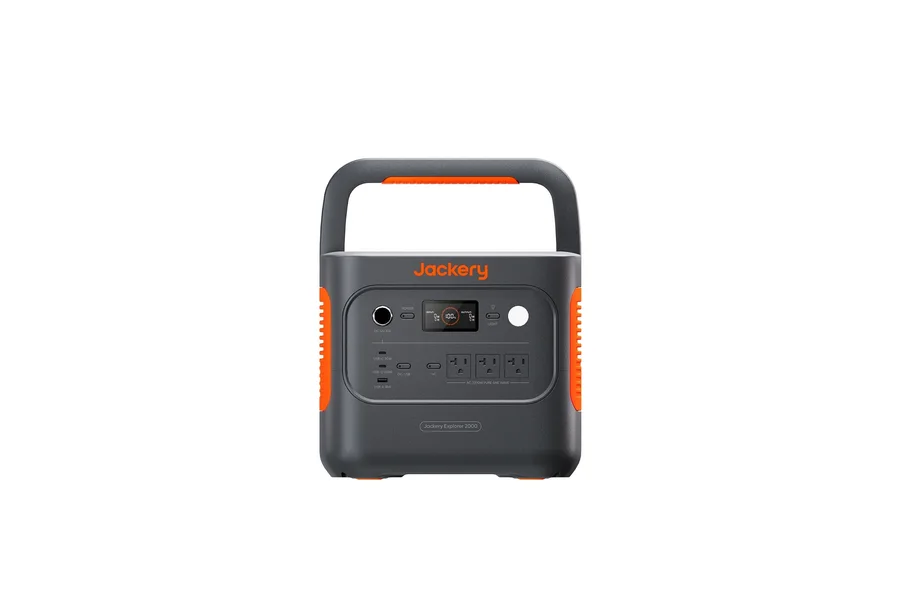
Jackery Explorer 2000 v2
- Battery capacity
- 2,042 Wh
- Continuous AC output
- 2,200 W
- Rated surge / peak
- 4,400 W
- AC voltage
- 120V
Power station calculator
Estimate how much battery capacity you need to keep a refrigerator running during a power outage, camping trip, or off-grid use.
Refrigerators cycle on and off. Enter approximate compressor runtime rather than assuming the refrigerator draws its running wattage 24 hours a day.
Startup surge power can be much higher than normal running watts, so power station inverter output matters in addition to battery capacity.
Daily usage
1,200 Wh
Total energy per day
Recommended capacity
1,765 Wh
Shop around 2,000 Wh
Estimated runtime
27 hours
For a 2,000 Wh unit
You're all set. A 2,000 Wh power station covers your 1,200 Wh/day with the 20% reserve and 85% inverter efficiency you set. Adjust your devices or usage to see it change.
Edit any value — the summary updates as you type.
Example values only — actual running wattage, duty cycle, and startup surge vary by appliance, temperature, age, and usage.
The defaults suit most people. Adjust them if your situation is different.
Recommendation
Your estimate points to roughly the 2,000Wh class. Compare the units below on the specs that decide whether one will run your devices.
Your estimate is around 2,000Wh, which suits longer runtimes or heavier loads.
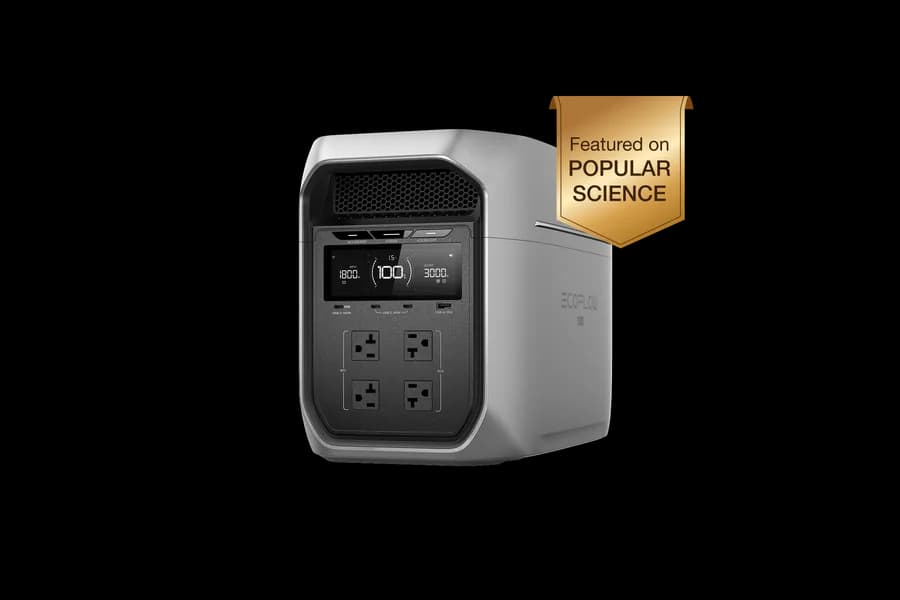
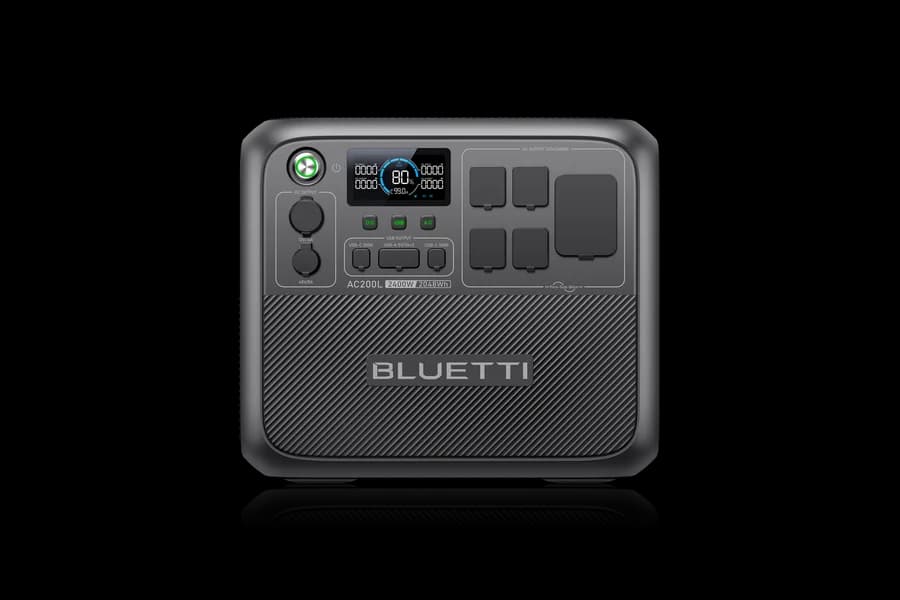
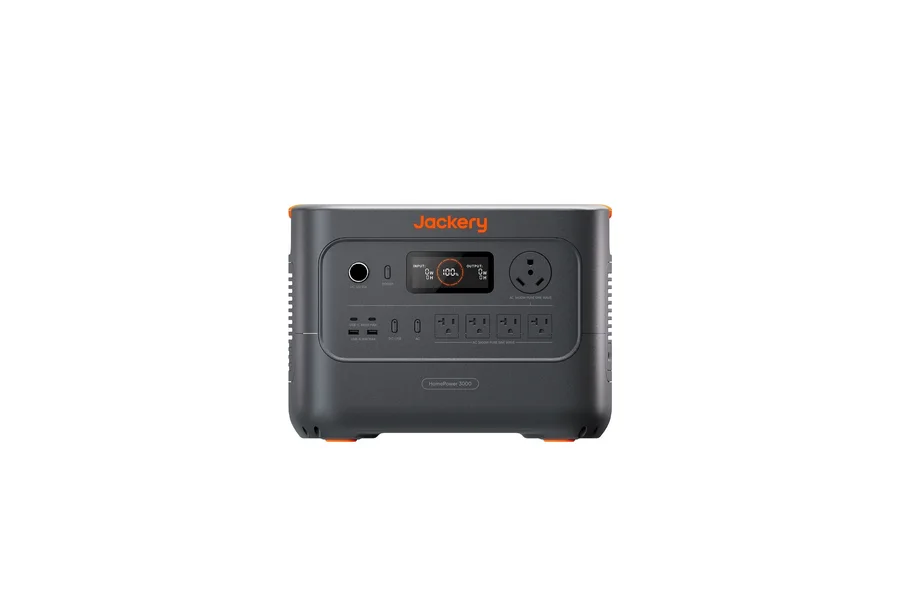

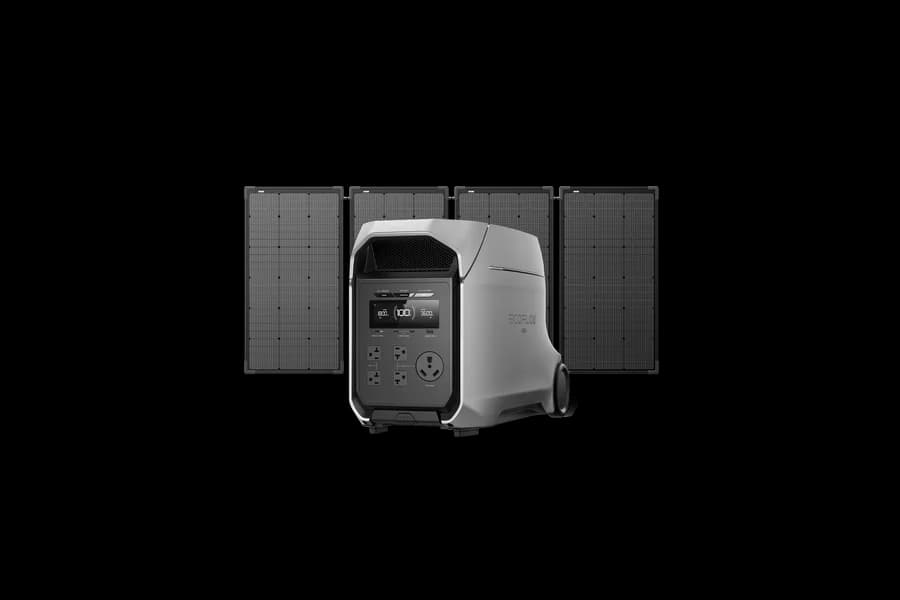
Capacity class is a starting point only. Specs shown are the manufacturer's published, per-model figures; prices and availability change, so confirm the actual unit's specifications — usable capacity, continuous and surge output, AC voltage, and maximum charge input — on the retailer's page against the devices you plan to run before buying.
Disclosure: Some links in this section are affiliate links. Your purchase price stays the same, and this site may earn a referral commission if you buy through them.
As an Amazon Associate I earn from qualifying purchases.
Battery capacity (watt-hours) and a power station's inverter output (watts) are two different specs. A refrigerator may run at 150 W but briefly draw several times that much when the compressor starts. This calculator estimates the watt-hours you need — it doesn't check whether a power station's inverter can handle your refrigerator's starting surge. Check your refrigerator's label or manual for its running and starting wattage, and check your power station's continuous and surge output specifications before relying on it for refrigerator backup.
150 W × 8 equivalent hours = 1,200 Wh
The 8 hours here represents approximate compressor-on time, not a full day of continuous running. That 1,200 Wh figure is the raw daily energy estimate — inverter losses and a battery reserve push the real requirement higher. Using this calculator's defaults (85% efficiency, 20% reserve), the same day works out to about 1,765 Wh, which rounds up to a 2,000 Wh power station.
Refrigerator compressors typically draw somewhere between 100 and 250 watts while actively cooling, with mini fridges and small units on the lower end and large or older refrigerators, or those with an ice maker, on the higher end. The number on the appliance's rating label is usually its running wattage — the power it draws while the compressor is actively on — not a measure of average use throughout the day. Check your specific model's label or manual for the most accurate figure.
Unlike a space heater or a lightbulb, a refrigerator's compressor cycles on and off to maintain a set internal temperature — it isn't drawing power the entire day. Depending on the model, ambient temperature, and how often the door opens, the compressor might only be actively running for a portion of each hour. That's why this calculator asks for "hours per day" as an approximate equivalent compressor-on time rather than assuming the refrigerator draws its running wattage for a full 24 hours. Multiplying rated wattage by 24 hours would significantly overestimate actual energy use for most refrigerators.
Running watts describe how much power the compressor draws once it's already spinning; startup (or surge) watts describe the brief spike required to get the compressor motor moving, which can be noticeably higher for a moment. This matters because a power station's battery capacity (Wh) and its inverter's power output (W) are separate specifications — a battery might store plenty of energy but still fail to start a refrigerator if the inverter's peak or surge output rating is too low. There's no single multiplier that applies to every refrigerator, so check your appliance's label or manual for its starting wattage where listed, and compare it against your power station's rated continuous and surge output before relying on it.
Daily watt-hour use is running watts multiplied by approximate compressor-on hours: for example, a 150-watt refrigerator with about 8 equivalent hours of compressor runtime uses roughly 1,200 Wh per day. If you have access to your specific refrigerator's measured or manufacturer-listed daily or annual energy consumption, that figure will generally be more accurate than an estimate built from running wattage and a guessed runtime — use it instead when it's available.
If your refrigerator's EnergyGuide label lists an estimated annual energy use in kWh, you can convert that into an average daily figure: annual kWh ÷ 365 = average kWh/day. Multiply by 1,000 to convert to watt-hours: kWh/day × 1,000 = Wh/day.
365 kWh/year ÷ 365 = 1 kWh/day → 1 kWh/day × 1,000 = approximately 1,000 Wh/day
This gives a useful average, but actual daily use varies with ambient temperature, how often the door is opened, the thermostat setting, the refrigerator's age, whether it has an ice maker, its defrost cycle, and how full it is. Treat the label-based estimate as a starting point rather than an exact prediction for any single day.
Start with your refrigerator's daily watt-hour estimate — from running wattage and equivalent hours, or from an EnergyGuide label calculation — then multiply by the number of days of backup you want. The calculator above adjusts that figure upward for inverter efficiency and the battery reserve you want to keep, then rounds up to a common power station size. Because refrigerator loads are less predictable than a simple always-on device, it's reasonable to size a bit generously and lean toward the next size up if your estimate falls close to a boundary.
The basic idea is straightforward: usable battery energy divided by the refrigerator's average energy use gives an approximate runtime. The runtime estimator built into the calculator above does exactly this, using your entered wattage, equivalent hours, efficiency, and reserve settings. For a refrigerator specifically, treat the result as an approximation rather than an exact countdown — compressor cycling and occasional startup surges mean actual runtime can vary from the average-based estimate, especially if the refrigerator's compressor runs more than usual on a hot day or with frequent door openings. The Power Station Runtime Calculator explains the underlying formula and the efficiency and reserve losses in more depth.
For outage planning, decide how many days you want to keep the refrigerator running and multiply your daily watt-hour estimate accordingly. Consider whether you'll have a way to recharge the power station during an extended outage, since that affects how much capacity you actually need on hand.
If you're also backing up other outage-critical devices, like a CPAP machine, see our CPAP Power Station Calculator for CPAP-specific guidance, or use the Home Power Outage Calculator to add every essential to one combined outage estimate.
Chest and upright freezers often use somewhat less running wattage than a full refrigerator, since they typically don't include features like an ice maker or a frost-free defrost heater, but their compressors still cycle in the same way. A well-insulated, mostly full freezer also tends to hold its temperature longer during an outage than a refrigerator, since frozen contents act as thermal mass. If you're backing up both a refrigerator and a freezer, add them as separate devices in the calculator above so each one's wattage and equivalent runtime is accounted for individually.
Because a refrigerator draws power continuously, in cycles, rather than for a single scheduled task, backing it up for more than a day or two generally benefits from a way to recharge the power station, such as solar panels. Solar output varies with panel size, weather, and daylight hours, so it's realistic to expect a partial recharge on cloudy days rather than a guaranteed full one. Pairing solar with some extra reserve capacity gives more margin if a stretch of low sunlight coincides with an extended outage.
To estimate how long a panel would take to top the battery back up, use the Solar Charge Time Calculator, or the Solar Panel Size Calculator to find the panel wattage that keeps up with a day of fridge use. If you're also running Starlink off-grid, see our Starlink Power Station Calculator for solar and battery planning specific to Starlink's power draw.
These figures assume about 8 equivalent hours of compressor-on time per day and haven't been adjusted for inverter efficiency or battery reserve yet — use the calculator above for a number tailored to your actual refrigerator and settings.
| Running watts | Daily use (~8 equiv. hrs) | ~2 days (before adjustments) |
|---|---|---|
| 80 W | 640 Wh | 1,280 Wh |
| 120 W | 960 Wh | 1,920 Wh |
| 150 W | 1,200 Wh | 2,400 Wh |
| 200 W | 1,600 Wh | 3,200 Wh |
Example values only. Actual running wattage, duty cycle, and startup surge vary by appliance, temperature, age, and usage.
Most residential refrigerators draw 100 to 250 watts while running, with a compressor that cycles on and off rather than running continuously. Assuming roughly 150 watts and about 8 equivalent hours of compressor-on time per day, that's around 1,200 Wh of daily use. After inverter losses and a battery reserve, a power station in the 1,500 to 2,000 Wh range is typically enough for one day of backup — enter your refrigerator's actual wattage into the calculator above for a number specific to your model.
Most refrigerators draw somewhere between 100 and 250 watts while the compressor is actively running, with mini fridges on the lower end and large or older units on the higher end. Check your refrigerator's rating label or manual for its specific running wattage.
It depends on the model, but a common estimate for a 150-watt refrigerator with about 8 equivalent hours of compressor-on time is roughly 1,200 Wh per day. If your refrigerator's EnergyGuide label lists annual kWh use, dividing by 365 and multiplying by 1,000 gives an average daily Wh figure that may be more accurate than an estimate built from wattage alone.
A 500 Wh power station can typically run a small, efficient refrigerator or mini fridge for several hours to about half a day, but it's generally not enough for a full day of backup for a standard-size refrigerator. Use the calculator above with your refrigerator's actual wattage to check.
A 1,000 Wh power station can often cover close to a full day for a typical refrigerator drawing around 150 watts with moderate compressor cycling, though actual runtime depends on your specific model, ambient temperature, and door-opening frequency.
For a refrigerator using roughly 1,200 Wh per day, a 2,000 Wh power station could cover somewhat more than a day and a half on average, though cycling and occasional longer compressor runs on hot days make this an approximation rather than an exact figure. Use the runtime estimator in the calculator above for a number based on your specific settings.
A refrigerator's compressor motor briefly draws more power to start spinning than it does once running, sometimes called startup or surge wattage. A power station needs an inverter rated to handle that momentary spike, in addition to having enough battery capacity for ongoing use — check your refrigerator's label for its starting wattage and your power station's surge output specification.
Yes, provided the power station has both enough battery capacity for your expected outage length and an inverter rated to handle the refrigerator's starting surge. Decide how many days you want to cover, multiply your daily watt-hour estimate accordingly, and check your specific refrigerator's and power station's specifications.
Yes — pairing a power station with solar panels is a common way to extend refrigerator backup beyond a day or two. Solar output varies with weather, panel size, and daylight hours, so it's realistic to plan for partial rather than guaranteed full recharges, and to keep some extra reserve capacity as a buffer.
Divide the label's estimated annual kWh figure by 365 to get an average kWh per day, then multiply by 1,000 to convert to watt-hours per day. For example, 365 kWh per year works out to about 1,000 Wh per day on average — though actual daily use varies with temperature, door openings, and other factors.