EcoFlow

EcoFlow DELTA 3 Classic
- Battery capacity
- 1,024 Wh
- Continuous AC output
- 1,800 W
- Rated surge / peak
- 3,600 W
- AC voltage
- 120V
Power station calculator
Work out what a portable power station needs to run a microwave: enough battery capacity in watt-hours for your run time, and enough continuous AC output for the microwave's electrical input watts.
Enter the microwave's input watts — its power consumption from the outlet, not the “700 W” or “1000 W” cooking rating on the front. A microwave is a short-run, high-draw load, so the inverter's output rating usually matters more than capacity.
Enter the microwave's electrical input watts — its power consumption from the outlet, from the rear label, the manual, or a watt meter. This is not the “700 W” / “1000 W” cooking power on the front.
Backup settings
Example only — input 1,500 W, 10 minutes of use. Replace both with your microwave's actual input watts and run time; the input figure is not derived from a cooking-power rating.
368 Wh
Recommended battery capacity after inverter efficiency and reserve. Look for a power station around 500 Wh — the 500Wh class.
Estimated microwave energy use
250 Wh
Minimum before reserve
294 Wh
This is a planning estimate. Actual energy use depends on your microwave's real input watts and how many minutes it runs, and a microwave is a short-run, high-draw load — the battery is rarely the limit.
This is separate from battery capacity. A power station needs both.
No startup / surge figure entered. Most microwave specs do not publish one; the continuous input watts are usually the figure that matters. If your manufacturer does list a surge or peak figure, enter it and check the power station against it.
A power station can have enough battery capacity but still fail to run a microwave if its inverter's continuous AC output is below the microwave's input watts. Check the unit's rated continuous output against the number above.
Check these against your microwave and the power station:
This calculator sizes energy (Wh) and reports the continuous output (W) you need from the numbers you enter. It does not check voltage or plug compatibility — confirm those yourself.
Recommendation
These 500Wh-class units have a confirmed continuous AC output of at least 1500 W, plus enough battery capacity for this load.
Your energy requirement fits a smaller battery class, but the 500Wh class is the first listed range with products whose confirmed AC output can meet your 1500 W load.

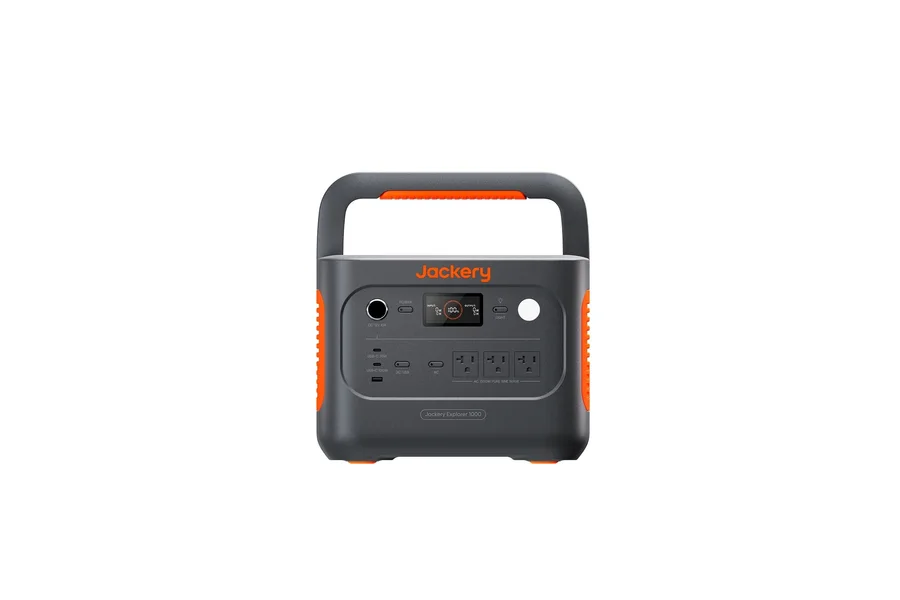
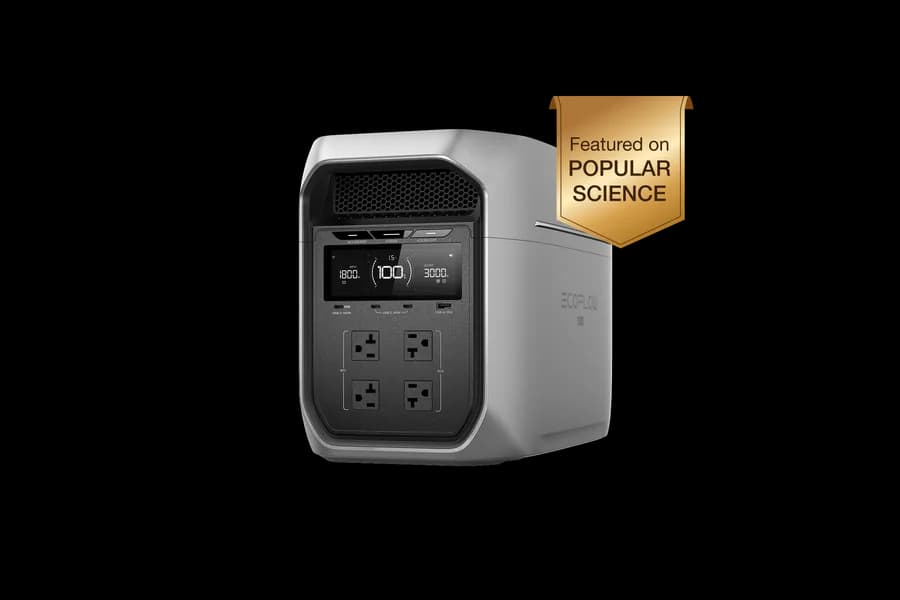
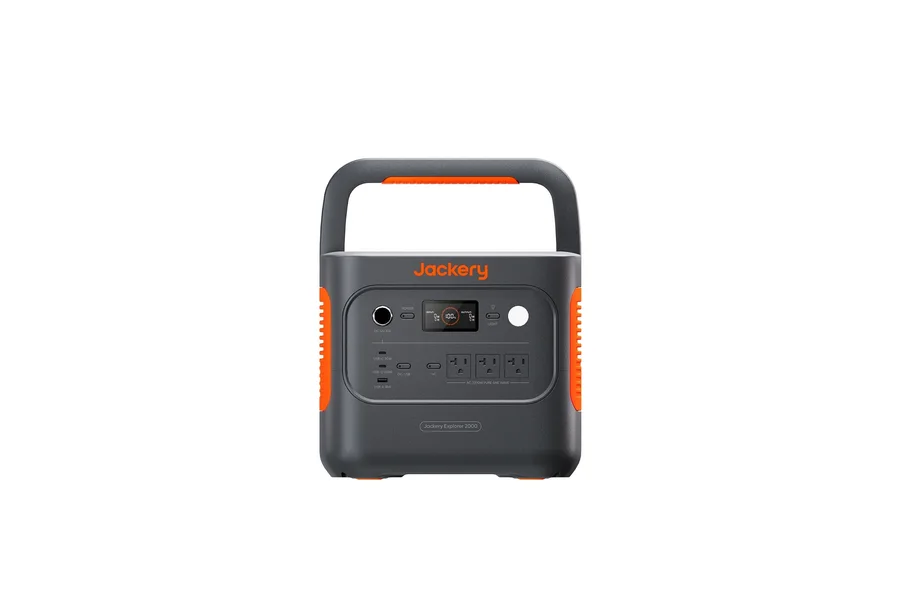
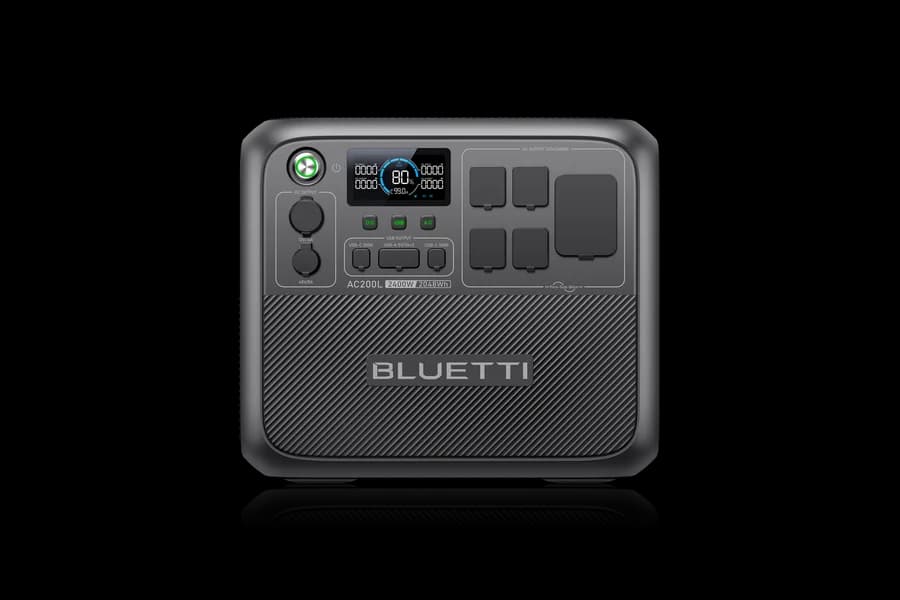
Capacity class is a starting point only. Specs shown are the manufacturer's published, per-model figures; prices and availability change, so confirm the actual unit's specifications — usable capacity, continuous and surge output, AC voltage, and maximum charge input — on the retailer's page against the devices you plan to run before buying.
Disclosure: Some links in this section are affiliate links. Your purchase price stays the same, and this site may earn a referral commission if you buy through them.
As an Amazon Associate I earn from qualifying purchases.
Capacity recommendations above are based on energy needs only. Before buying, verify the power station's continuous AC output against your microwave's input watts, plus its AC voltage, outlet configuration, and any startup / surge specification — capacity class alone does not confirm that a unit can run your microwave.
A power station can store plenty of watt-hours and still fail to run a microwave. Battery capacity (watt-hours) sets how many sessions you get; the inverter's continuous AC output (watts) decides whether the microwave runs at all. This calculator sizes the watt-hours and reports the continuous watts you need from the numbers you enter — it does not convert a cooking-power rating into input watts, it does not estimate a surge from the input figure, and it does not check voltage or plug type. Use the electrical input watts from the unit's rear label or manual, and confirm voltage separately.
The big number on the front of a microwave — 700 W, 900 W, 1000 W, 1200 W — is usually the cooking power, also called output power: roughly how much heating the oven delivers into the food. It is not how much electricity the microwave pulls from the outlet.
The figure this calculator needs is the electrical input watts, sometimes labelled “power consumption” or “input”. It is higher than the cooking figure because the magnetron and transformer are not 100% efficient, but how much higher varies by model. There is no reliable fixed multiplier, so this page does not turn a cooking rating into an input rating — you read the input figure directly.
Enter the input watts you find on the rear label, in the manual, on the manufacturer's spec sheet, or measured with a plug-in watt meter. The energy and continuous-output results on this page all depend on that number being the input figure, not the cooking figure.
The energy side of this uses the same method as the main Power Station Size Calculator. For a microwave, two specifications decide whether a power station works, and they are independent:
Because of that, microwave sizing is usually output-limited, not capacity-limited. A 2,000 Wh unit with a 2,000 W inverter runs most countertop microwaves; a 2,000 Wh unit with a 1,000 W inverter does not, no matter how full the battery is. To see how long a given unit lasts against a steady load, use the Power Station Runtime Calculator.
The front panel and the marketing usually show the cooking power. The electrical input figure is on the appliance itself and in the paperwork:
If you only have the cooking rating, do not scale it up by a guess. Measure it or find the real input number, then enter that in the calculator.
Energy use is just the input watts multiplied by the fraction of an hour the microwave runs. Because sessions are measured in minutes, the watt-hour total stays modest even though the wattage is high:
Add roughly 15–20% for inverter efficiency and a battery reserve, and typical microwave use over a day still lands in the low hundreds of watt-hours. What decides whether a power station works is almost always its continuous output rating, not whether it holds those watt-hours.
A microwave with a rear label reading 1,500 W of input power, run for 10 minutes total. These are example figures — use your own microwave's input watts, not its cooking rating.
1,500 W × 10 min / 60 = 250 Wh
That 250 Wh is the energy the microwave uses before adjustments. After 85% inverter efficiency it is about 294 Wh, and keeping a 20% reserve brings the recommended battery capacity to roughly 368 Wh — the 500 Wh class on energy alone.
The catch is output, not capacity. Separately from the 368 Wh, the power station must supply at least 1,500 W continuously to run this microwave. A small power station can clear the energy figure and still be unable to start it because its inverter tops out below 1,500 W.
On energy, easily. A 1,000 Wh power station has roughly 650–800 Wh usable, which is many microwave sessions — a 250 Wh, ten-minute example is about three full sessions with room to spare.
Whether it runs the microwave at all comes down to the inverter. A typical countertop microwave draws around 1,200–1,700 W of input. A 1,000 Wh unit with a 1,000 W (or smaller) inverter cannot sustain that and will overload. Some 1,000 Wh-class units ship with a larger inverter — 1,500 W or more, often with a short higher “surge” or “power-lifting” mode — and those can run a smaller microwave.
Check the power station's rated continuous AC output against your microwave's input watts before counting on it. If you also need to keep a fridge, lights, or a CPAP going, add them together in the Home Power Outage Calculator.
For most countertop microwaves, yes. A 2,000 Wh power station usually pairs with a 2,000 W or larger inverter, which covers the 1,200–1,800 W input of a typical unit with headroom to spare. Energy is not the issue — around 1,300–1,600 Wh usable is dozens of short sessions.
It is still not automatic. A few things to confirm:
Enter your measured input watts in the calculator above and compare the required continuous output it reports with the power station's spec.
A microwave is unusual among household loads: it pulls a lot of power — often 1,200–1,800 W of input — but only for a few minutes at a time. That combination flips the usual sizing question.
So the useful check is not “how many Wh do I need” but “is the inverter's continuous output at least my microwave's input watts”. The Power Station Runtime Calculator shows how little runtime a high-wattage load actually consumes. For a heavier, longer-running load with a real motor surge, the Air Conditioner Power Station Calculator covers both capacity and surge.
Microwave sessions are short, so between uses there is time to recharge. The Solar Charge Time Calculator estimates how quickly a panel refills the power station between meals. For a longer cook, the Air Fryer Power Station Calculator sizes an air fryer on the same battery-and-output basis.
Check every item against your microwave and your situation before buying:
A power station in the right capacity class is not confirmation that it can run your microwave. Only its continuous AC output, checked against the microwave's input watts, tells you that.
Size it on two separate numbers. For battery capacity, multiply the microwave's electrical input watts by the minutes of use divided by 60, then add headroom for inverter losses and a reserve; a 1,500-watt input microwave run 10 minutes is about 250 Wh raw, roughly 370 Wh recommended, so almost any power station holds enough. The number that matters more is continuous AC output: the inverter's continuous rating must be at or above the microwave's input watts, or it will overload.
A typical countertop microwave draws roughly 1,200 to 1,800 watts of electrical input while running on high. That is more than the cooking-power number on the front. Use the input or power-consumption figure from the rear rating label, the manual, or a plug-in watt meter.
No. The cooking or output wattage (700 W, 1000 W, and so on) describes how much heating the oven delivers into food. The electrical input wattage is how much power it pulls from the outlet, and it is higher. The difference is not a fixed ratio, so read the input figure directly rather than scaling the cooking figure.
On stored energy, yes, easily. Whether it runs the microwave at all depends on the inverter: a 1,000 Wh unit with a 1,000 W inverter cannot sustain a 1,200 to 1,700 W microwave, while a 1,000 Wh-class unit with a 1,500 W or larger inverter can run a smaller one. Check the continuous AC output rating against the microwave's input watts.
For most countertop microwaves, yes. A 2,000 Wh power station usually has a 2,000 W or larger inverter, which covers a typical 1,200 to 1,800 W input with headroom, and the battery holds many sessions. Confirm the continuous rating, and note that large commercial microwaves can exceed 2,000 W input.
Multiply the input watts by 10 and divide by 60. A 1,500-watt input microwave uses 1,500 x 10 / 60 = 250 Wh in 10 minutes, before inverter efficiency and reserve. A 1,200-watt input microwave uses 200 Wh in the same time.
Yes, if the power station's continuous AC output is at least the microwave's electrical input watts and it has a suitable AC outlet, ideally on a pure sine wave inverter. The battery capacity is rarely the limiting factor because sessions are short.
A microwave has a brief inrush when it powers on, but most manufacturer specs do not publish a separate surge figure and the continuous input watts are usually the number that matters. If your manufacturer does list a startup or peak figure, make sure the power station's surge rating covers it. This calculator does not estimate a surge from the input watts.
Yes, from a power station whose inverter can supply the microwave's input watts continuously. Treat it as a convenience load: back up medical equipment, the refrigerator, and lighting first, then add the microwave if the inverter has the output to spare.
Yes, if its continuous AC output meets the microwave's input watts and it connects to the microwave's circuit. Many RVs already have an onboard inverter; check whether its continuous rating covers the microwave and whether it feeds that outlet.