BLUETTISmallest that fits

BLUETTI Elite 300
- Battery capacity
- 3,014 Wh
- Continuous AC output
- 2,400 W
- Rated surge / peak
- Not listed
- AC voltage
- 120V
Power station calculator
Work out what a portable power station needs to run a slow cooker. The wattage is low, so the inverter is rarely the problem — it is the 4-to-10-hour runtime that decides how big a battery you need.
Enter the cooker's input watts from its label, at the setting you use, and the cook time in hours. Keep-warm energy is estimated separately.
Enter the slow cooker's electrical input watts at the setting you plan to use, from its rating label or manual, and how many hours it runs. This sizes the cook — add keep-warm energy separately if you use it.
Backup settings
Example only — 250 W slow cooker, 6 hours of cooking. Replace both with your cooker's actual input watts at your setting and your real cook time.
2,206 Wh
Recommended battery capacity after inverter efficiency and reserve. On capacity alone the calculator rounds that up to about a 3,000 Wh power station, which falls in the 3,000Wh+ product recommendation range below.
Estimated cook energy
1,500 Wh
Minimum before reserve
1,765 Wh
This is a planning estimate for the cook. It assumes the cooker draws its full input watts for the whole time you enter. Enter the cooker's active or rated input watts here — the same figure also sizes the required continuous output, so it must be the full heating draw, not a long-run cycling average. Thermostat cycling and keep-warm are not modelled; add keep-warm energy separately if you leave it on.
This is separate from battery capacity. A power station needs both.
A slow cooker draws little power — usually 100 to 400 W — so almost any power station's inverter can sustain it. The catch is the other way round: run that small load for 4 to 10 hours and the watt-hours add up, so battery capacity, not continuous output, is what decides whether a unit lasts the cook.
A slow cooker is a low-power resistive heating load; its start-up draw is negligible, so this page does not ask for a surge figure. If your model's manufacturer publishes a peak or starting figure, check the power station's surge rating against that as well.
This calculator sizes cook energy (Wh) and reports the continuous output (W) you need from the numbers you enter. It does not check voltage or plug compatibility — confirm those yourself.
Recommendation
These 3,000Wh+-class units have a confirmed continuous AC output of at least 250 W, plus enough battery capacity for this load.
Your estimate is above 2,000Wh, where larger and expandable systems become relevant.
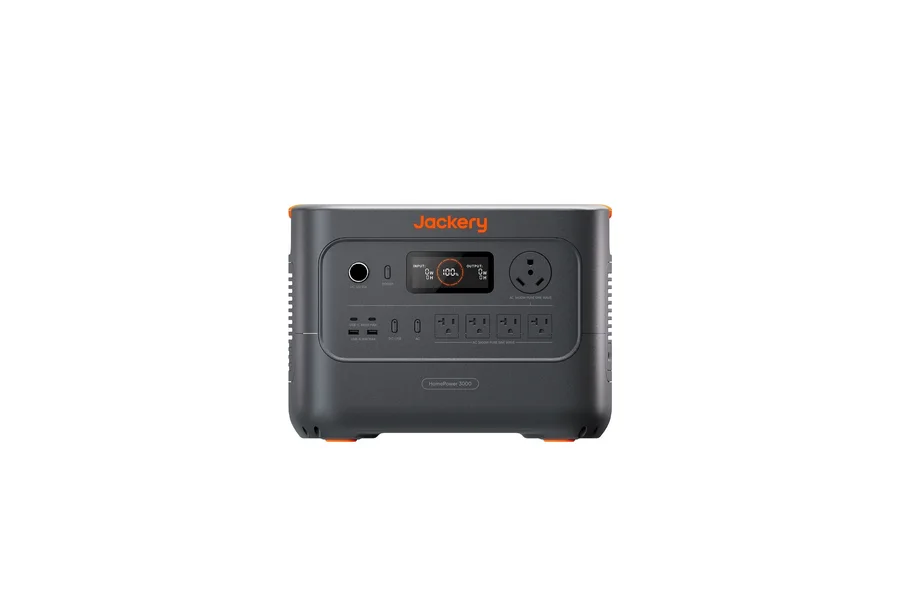
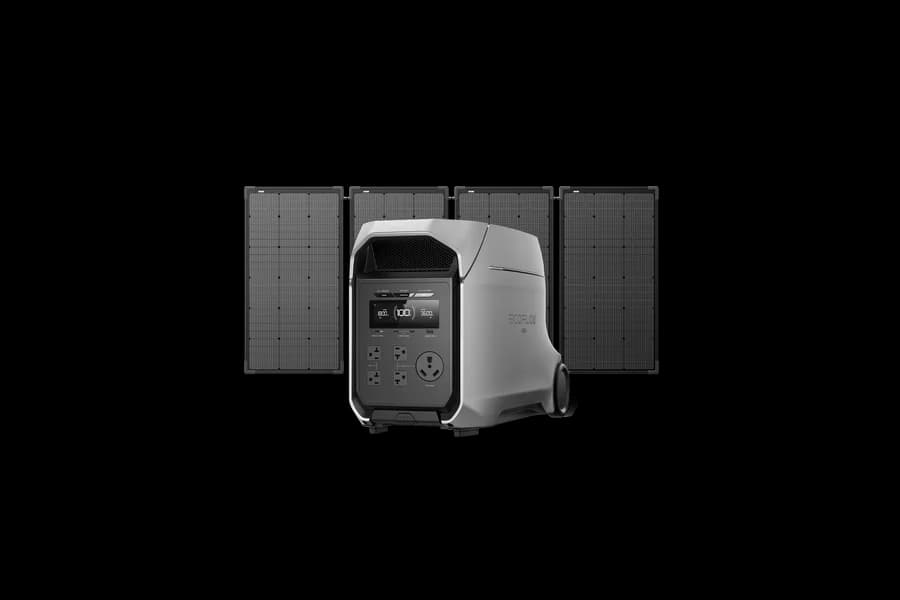
Capacity class is a starting point only. Specs shown are the manufacturer's published, per-model figures; prices and availability change, so confirm the actual unit's specifications — usable capacity, continuous and surge output, AC voltage, and maximum charge input — on the retailer's page against the devices you plan to run before buying.
Disclosure: Some links in this section are affiliate links. Your purchase price stays the same, and this site may earn a referral commission if you buy through them.
As an Amazon Associate I earn from qualifying purchases.
Recommendations above are based on the known battery-capacity and continuous-output requirements only. Before buying, verify the power station's real usable capacity against your slow cooker's cook-and-keep-warm energy, plus its continuous AC output, AC voltage, and outlet configuration — this is not an unconditional claim that a given unit will run your slow cooker for the full cook.
A slow cooker only draws 100 to 400 W, so it is easy to assume a small power station will run one. The wattage is not the problem — the runtime is. A slow cook is 4 to 10 hours, and a small load held for that long adds up to a large number of watt-hours.
At 250 W for 6 hours that is 1,500 Wh of raw energy, and after inverter losses and a reserve the recommended battery capacity is over 2,000 Wh — a large power station, driven entirely by the hours, not the watts. The continuous-output requirement stays at 250 W the whole time, which almost any unit clears.
So for a slow cooker, battery capacity is the binding constraint, not the inverter rating. That is the opposite of a kettle or a toaster oven, where a brief high draw makes continuous output the limit.
The energy side of this uses the same method as the main Power Station Size Calculator. Two specifications decide whether a power station can run a slow cooker, and they are independent:
The practical question is whether the battery lasts the whole cook. To check how long a given unit runs a steady low load, use the Power Station Runtime Calculator.
Small 1.5–3 qt cookers are often 100–150 W; 4–6 qt models are commonly 200–300 W; large 7–8 qt cookers can reach 320–400 W on High. Do not assume a figure from the quart size — read the label and enter that number, for the setting you plan to use.
Energy use is the input watts multiplied by the hours it runs. The wattages are small, but the hours are long, so the totals land squarely in large-power-station territory. These figures are a planning ceiling — a cooker with heavy thermostat cycling may use less.
| Input watts | 2 h | 4 h | 6 h | 8 h |
|---|---|---|---|---|
| 100 W | 200 Wh | 400 Wh | 600 Wh | 800 Wh |
| 150 W | 300 Wh | 600 Wh | 900 Wh | 1,200 Wh |
| 200 W | 400 Wh | 800 Wh | 1,200 Wh | 1,600 Wh |
| 250 W | 500 Wh | 1,000 Wh | 1,500 Wh | 2,000 Wh |
| 300 W | 600 Wh | 1,200 Wh | 1,800 Wh | 2,400 Wh |
| 400 W | 800 Wh | 1,600 Wh | 2,400 Wh | 3,200 Wh |
Add roughly 25% for an 85% inverter and a 20% reserve. A 250 W slow cooker for 6 hours is 1,500 Wh raw, around 2,206 Wh recommended — a 3,000 Wh-class power station, sized entirely by the runtime.
A small 200 W slow cooker run for 4 hours. Example figures — not every small cooker is 200 W, so use your own label wattage and cook time.
200 W × 4 h = 800 Wh
That 800 Wh is the raw cook energy. After 85% inverter efficiency it is about 941 Wh, and keeping a 20% reserve brings the recommended battery capacity to roughly 1,176 Wh. On capacity alone the calculator rounds that to about a 1,500 Wh power station, and the listed product catalogue begins at the 2,000Wh recommendation range.
The output requirement is only 200 W, which every listed unit clears, so the recommendation stays in the 2,000Wh range on capacity grounds alone. Even a low-wattage cooker on a half-day cook needs a mid-to-large power station — the hours do the work. The calculator's own rounded size figure (1,500 Wh) tracks the cook energy, not the catalogue range.
A 250 W slow cooker run for 6 hours — a typical weeknight braise. This is the calculator's default example. Use your own numbers.
250 W × 6 h = 1,500 Wh
That 1,500 Wh is the raw cook energy. After 85% inverter efficiency it is about 1,765 Wh, and keeping a 20% reserve brings the recommended battery capacity to roughly 2,206 Wh. On capacity alone the calculator rounds that to about a 3,000 Wh power station, and the listed product catalogue begins at the 3,000Wh+ recommendation range — the first range whose real product capacity can meet that requirement.
Then the output requirement is applied. It is only 250 W continuously, far below what any listed unit can supply. So the recommendation stays in the 3,000Wh+ range, chosen entirely on capacity — the six hours of runtime, not the 250 W, are what put it there. The calculator's own rounded size figure does not change either way.
Slow cookers have Low, High, and usually Warm settings, but the relationship between the setting and the power draw is not fixed and differs by model:
Because of that, the calculator does not convert a setting into a wattage — there is no “Low = 50%” or “Warm = 25%”. Enter the active input watts at the setting you plan to use — the draw while the element is heating, read from a watt meter if you can, not a long-run cycling average — and otherwise the nameplate maximum as a conservative planning value.
Once the food is up to temperature, a slow cooker's element switches on and off to hold it there, so the average power over a long cook can be noticeably below the nameplate wattage. The peak draw while the element is on is still the full input wattage.
How much the average drops is not predictable — it depends on the model, the setting, how full the pot is, the starting temperature of the food, the room temperature, and how often the lid comes off. So this calculator uses full entered watts for the full entered hours as a safe planning estimate and does not apply a duty-cycle discount.
Cycling can pull the average energy use below that estimate, but do not replace the cooker's active or rated wattage with a long-run average in this calculator, because the same input is also used to size the required continuous AC output — and the inverter still has to supply the full heating draw whenever the element switches on.
For a tighter energy-only figure, measure the total watt-hours over a full cook cycle, or multiply a measured average wattage by the cook hours, and use that number for capacity planning on its own. Either way, verify the power station's continuous AC output against the cooker's full active or nameplate wattage separately. To see how a steady low draw pulls a battery down over many hours, use the Power Station Runtime Calculator, and for a multi-figure capacity estimate add the phases as rows in the main Power Station Size Calculator — then still check the continuous output against the full wattage yourself.
The calculator sizes the cook only. Many slow cookers drop to a Warm setting after the cook, or you leave them on Low to hold the food, and that can run for hours more. Its power draw is usually lower than the cook, but it varies by model, so it is left out of the main calculation rather than guessed.
The cook phase and the keep-warm phase usually draw different wattages, so add their energy separately — never as one combined watts × hours. Work out cook energy (cook watts × cook hours) and keep-warm energy (keep-warm watts × keep-warm hours), then add the two watt-hour figures. For example, 250 W for 6 hours is 1,500 Wh, an 80 W warm setting for 3 hours is 240 Wh, and the total raw energy is 1,740 Wh. The 80 W here is only an illustration — use your own model's figure. If the maker publishes a single measured figure for a full cook-plus-warm cycle, use that instead.
To model both phases at once, add them as two rows in the main Power Station Size Calculator — one “Slow cooker — cook” device at the cook watts and hours, and a separate “Slow cooker — keep warm” device at the warm watts and hours. It calculates each phase separately and adds their watt-hours correctly.
Only for a short cook, or a very small cooker. A 500 Wh unit has roughly 325–400 Wh usable. A 150 W mini cooker for 2 hours is about 300 Wh raw, which just fits; a 250 W cooker for a full 6-hour braise is 1,500 Wh raw and far beyond a 500 Wh unit.
Output is never the issue — a 500 Wh power station's inverter handles a slow cooker's wattage easily. It is purely a capacity question: a slow cook is a multi-kilowatt-hour job, and a 500 Wh unit does not have the hours in it.
For a shorter cook, yes. A 1,000 Wh unit has about 650–800 Wh usable. A 200 W cooker for 3 hours is 600 Wh raw, roughly 880 Wh recommended — near the edge of a 1,000 Wh unit. A 250 W cooker for 6 hours (1,500 Wh raw, over 2,000 Wh recommended) does not fit.
As always with a slow cooker, the inverter is not the limit — a 1,000 Wh power station has far more continuous output than the cooker needs. Match the unit's usable capacity to your cook energy plus any keep-warm time. If you also want to keep a fridge, lights, or a router going during an outage, add them together in the Home Power Outage Calculator.
This is the practical range for a full slow cook. A 2,000 Wh unit has roughly 1,300–1,600 Wh usable — enough for a 200 W cooker over 6–8 hours, or a 250 W cooker for around 5 hours, with a little left for a short warm hold.
A 250 W cooker for a full 6-hour cook works out to roughly 2,206 Wh recommended, which is just past a 2,000 Wh unit's usable capacity — so a longer or higher-wattage cook, or a meaningful keep-warm period, points to a 3,000 Wh-class unit, ideally one with expandable batteries. Output is never the constraint; plan on capacity and recharge speed.
A rice cooker runs the same low-and-slow way but finishes in under an hour. A toaster oven, an air fryer, and an induction cooktop are the opposite trade — high wattage, short runtime, and output-limited rather than capacity-limited.
A slow cooker is a low-stress way to cook during an outage — it needs no attention and its wattage is trivial for any power station. The catch is the total energy: a full cook is one to two kilowatt-hours or more, which is a large share of a portable unit's capacity.
For an outage, that usually means:
Check every item against your slow cooker and your situation before buying:
For a slow cooker, a power station in the right range is mostly a question of usable watt-hours. Confirm the unit's real usable capacity covers your cook energy plus any keep-warm hold, with a margin.
Size it on battery capacity, not inverter output. A slow cooker draws only 100 to 400 watts, so almost any power station's inverter can sustain it, but a 4-to-10-hour cook turns that small load into a large number of watt-hours. Cook energy is the input watts times the hours; a 250-watt cooker for 6 hours is 1,500 Wh raw and roughly 2,206 Wh after inverter losses and a reserve, which points to a 3,000 Wh-class power station.
Only a very small cooker for a short time. A 150-watt mini cooker for 2 hours is about 300 Wh raw, which just fits a 500 Wh unit's usable capacity. A 250-watt cooker for a full 6-hour braise is 1,500 Wh raw, far beyond a 500 Wh unit. The inverter is never the limit here; the capacity is.
For a shorter cook. A 1,000 Wh unit has roughly 650 to 800 Wh usable, so a 200-watt cooker for about 3 hours fits with little to spare. A 250-watt cooker for 6 hours needs over 2,000 Wh and does not. Match the unit's usable capacity to the cook energy plus any keep-warm time.
For most single cooks, yes. A 2,000 Wh unit has around 1,300 to 1,600 Wh usable — enough for a 200-watt cooker over 6 to 8 hours or a 250-watt cooker for about 5 hours. A full 6-hour cook at 250 watts works out just past that, so a longer or higher-wattage cook, or a long keep-warm hold, points to a 3,000 Wh-class unit.
Small 1.5-to-3-quart cookers are often 100 to 150 watts; 4-to-6-quart models are commonly 200 to 300 watts; large 7-to-8-quart cookers can reach 320 to 400 watts on High. Read the figure off the rating label or measure it with a watt meter rather than assuming one from the quart size.
Multiply the input watts by 6. A 250-watt slow cooker uses 250 x 6 = 1,500 Wh in 6 hours before inverter efficiency and a reserve; a 200-watt cooker uses 1,200 Wh. Allowing about 25% for an 85% inverter and a 20% reserve brings the 250-watt figure to roughly 2,206 Wh of recommended battery capacity.
Not reliably. On many cookers Low and High run the same heater and differ only in how often the thermostat cycles it, so the average draw is closer than the labels suggest. Low mostly changes how fast the food reaches a simmer, not the holding temperature. Enter the active heating watts for your setting rather than assuming a percentage.
It can. Once the food is hot, the element switches on and off to hold temperature, so the average power over a long cook is often below the nameplate wattage. How much lower depends on the model, the setting, how full the pot is, and the room, so this calculator does not assume a reduction. Keep entering the active or rated wattage here, because the same figure sizes the required continuous output; if you want a lower energy-only estimate, use measured total watt-hours or a measured average times the hours separately, and still check the power station's continuous output against the full wattage.
It varies by model, and it runs at a lower wattage than the cook. Because the two phases draw different wattages, work out cook energy and keep-warm energy separately — each as watts times hours — and add the watt-hour figures. Do not add the wattages together or combine the watts and the hours into one calculation.
Yes, and it is one of the easier appliances to run unattended, but plan for the energy. A full cook is one to two kilowatt-hours or more, so it needs a large power station and eats a real share of its capacity. Back up essentials first, and consider a shorter cook on High to save battery.