JackerySmallest that fits
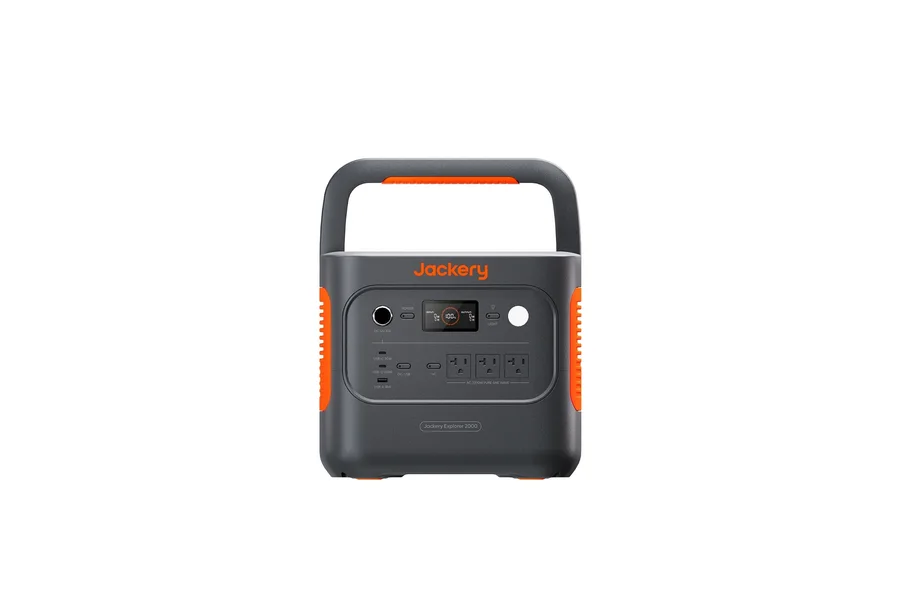
Jackery Explorer 2000 v2
- Battery capacity
- 2,042 Wh
- Continuous AC output
- 2,200 W
- Rated surge / peak
- 4,400 W
- AC voltage
- 120V
Power station calculator
Work out what a portable power station needs to run a toaster oven: enough continuous AC output for the heating elements' watts, and enough battery capacity for the cook — which, over a preheat and a full bake, adds up.
Enter the oven's input watts from its label, not a guess from the oven size, and the total minutes it draws power including preheat and every batch.
Enter the oven's electrical input watts from its rating label or manual, and the total minutes it draws power — including preheat, if you use it, and every batch.
Backup settings
Example only — 1,500 W toaster oven, 30 minutes of use. Replace both with your oven's actual input watts and cook time.
1,103 Wh
Recommended battery capacity after inverter efficiency and reserve. On capacity alone the calculator rounds that up to about a 1,500 Wh power station, which falls in the 2,000Wh product recommendation range below.
Estimated toaster oven energy use
750 Wh
Minimum before reserve
882 Wh
This is a planning estimate. It assumes the oven draws its full input watts for the whole time you enter. Preheat and any thermostat cycling change real use — add preheat to the minutes and enter your best estimate of powered time rather than relying on a fixed reduction.
This is separate from battery capacity. A power station needs both.
A toaster oven's heating elements pull the full input wattage whenever they are on, and a bake can run half an hour or more. A power station can hold plenty of watt-hours and still fail to run one if its inverter's continuous AC output is below the oven's input watts. Check the unit's rated continuous output against the number above.
A toaster oven is a resistive heating load, sometimes with a small convection fan; its start-up draw is brief and minor, so this page does not ask for a surge figure. If your model's manufacturer publishes a peak or starting figure, check the power station's surge rating against that as well.
This calculator sizes energy (Wh) and reports the continuous output (W) you need from the numbers you enter. It does not check voltage or plug compatibility — confirm those yourself.
Recommendation
These 2,000Wh-class units have a confirmed continuous AC output of at least 1500 W, plus enough battery capacity for this load.
Your estimate is around 2,000Wh, which suits longer runtimes or heavier loads.
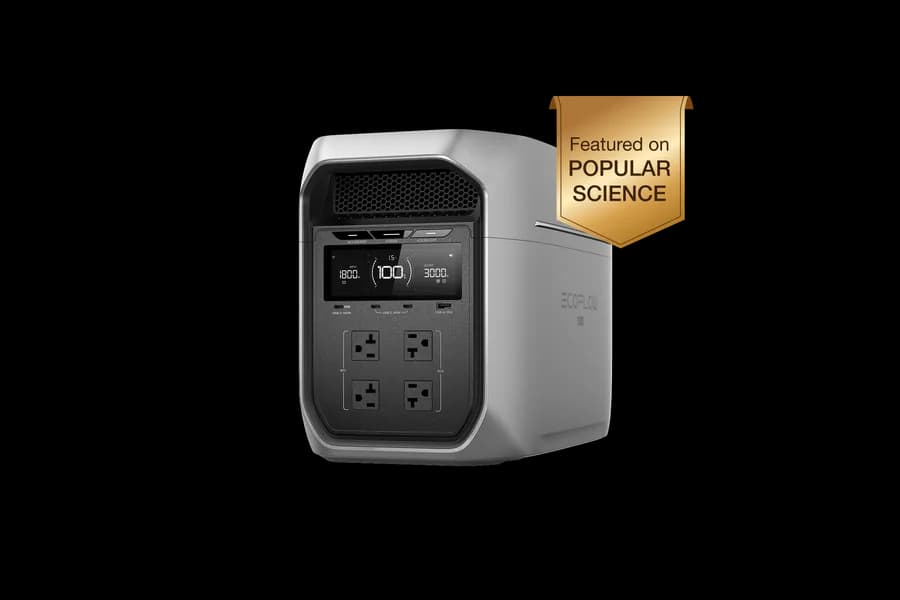
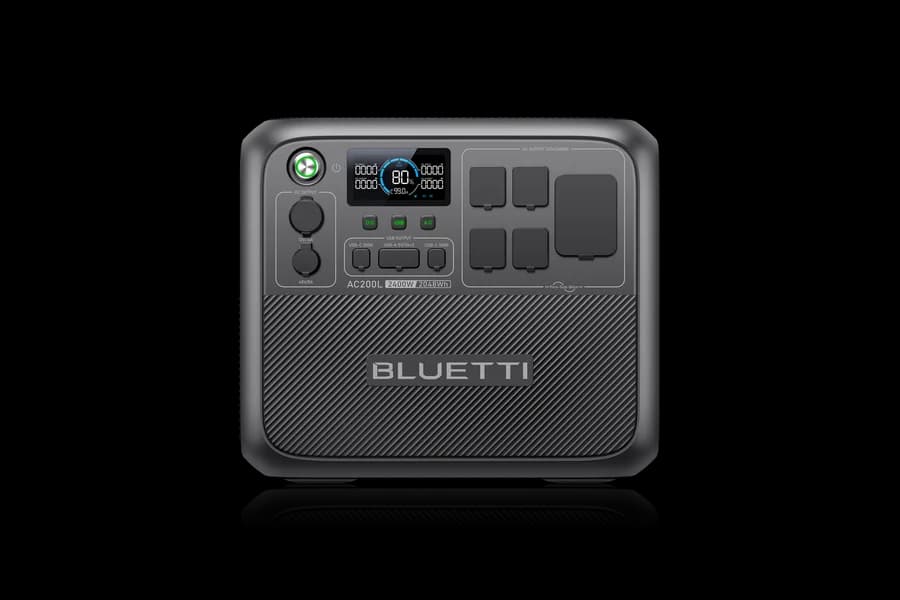
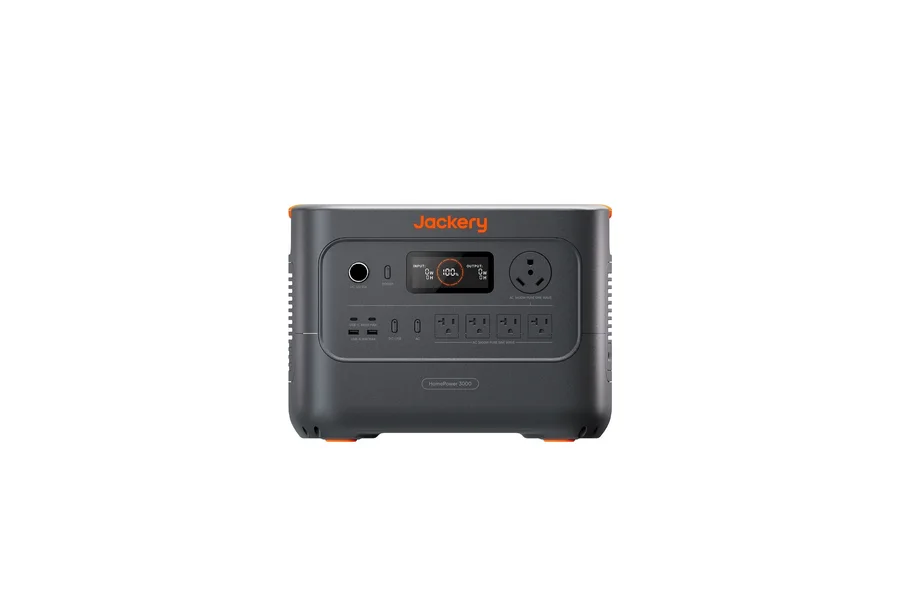

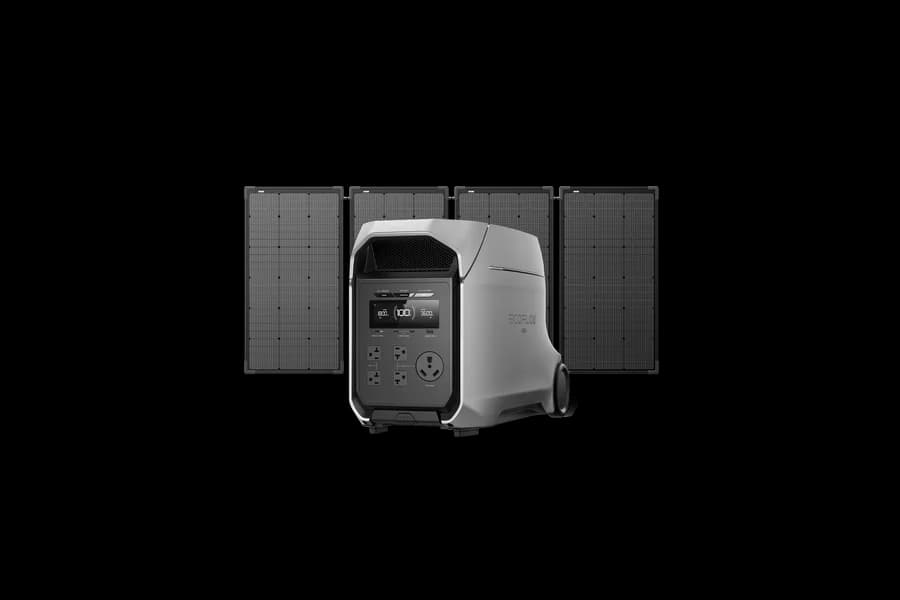
Capacity class is a starting point only. Specs shown are the manufacturer's published, per-model figures; prices and availability change, so confirm the actual unit's specifications — usable capacity, continuous and surge output, AC voltage, and maximum charge input — on the retailer's page against the devices you plan to run before buying.
Disclosure: Some links in this section are affiliate links. Your purchase price stays the same, and this site may earn a referral commission if you buy through them.
As an Amazon Associate I earn from qualifying purchases.
Recommendations above are based on the known battery-capacity and continuous-output requirements only. Before buying, verify the power station's continuous AC output against your toaster oven's input watts, plus its AC voltage, outlet configuration, real usable capacity, and your expected cook, preheat, and batch time — this is not an unconditional claim that a given unit will run your oven.
A toaster oven draws a high, steady wattage and a bake can run 20 to 40 minutes or more, so both battery capacity and continuous AC output matter. Capacity (watt-hours) sets how many cooks you get; the inverter's continuous output (watts) decides whether it runs at all. This calculator sizes the watt-hours from the watts and minutes you enter and reports the continuous watts you need. It does not guess a preheat time, apply a thermostat duty cycle, add a convection-fan figure, or check voltage and plug type.
The energy side of this uses the same method as the main Power Station Size Calculator. Two specifications decide whether a power station can run a toaster oven, and they are independent:
Both can be the limit: a small battery behind a big inverter runs out mid-bake, and a big battery behind a small inverter never starts the elements. To see how long a given unit lasts against a steady load, use the Power Station Runtime Calculator.
Compact two-slice toaster ovens are often 1,000–1,200 W; mid-size and larger countertop ovens are commonly 1,500–1,800 W. Do not assume a figure from the oven size or the number of racks — read the label and enter that number.
Energy use is the input watts multiplied by the fraction of an hour the oven runs. A toaster oven holds a high draw for the whole preheat and much of the bake, so the watt-hour totals add up quickly — more than a microwave, and comparable to an air fryer.
| Input watts | 10 min | 20 min | 30 min |
|---|---|---|---|
| 1,000 W | 167 Wh | 333 Wh | 500 Wh |
| 1,200 W | 200 Wh | 400 Wh | 600 Wh |
| 1,500 W | 250 Wh | 500 Wh | 750 Wh |
| 1,700 W | 283 Wh | 567 Wh | 850 Wh |
| 1,800 W | 300 Wh | 600 Wh | 900 Wh |
Add roughly 25% for an 85% inverter and a 20% reserve, and add preheat and extra batches to the minutes. A 1,500 W toaster oven for a 30-minute cook is 750 Wh raw, around 1,103 Wh recommended — a larger power station holds that, but the continuous output rating is still what decides whether it runs.
A 1,500 W toaster oven run for 10 minutes — a quick reheat or a couple of slices of toast. Example figures; use your own oven's label wattage and cook time.
1,500 W × 10 min / 60 = 250 Wh
That 250 Wh is the raw energy. After 85% inverter efficiency it is about 294 Wh, and keeping a 20% reserve brings the recommended battery capacity to roughly 368 Wh. On capacity alone the calculator rounds that to about a 500 Wh power station, and the listed product catalogue begins at the 500Wh recommendation range.
The energy is small, but the output requirement is not. Separately from the 368 Wh, the power station has to supply at least 1,500 W continuously the whole time the elements are on. The 500Wh range's listed units cannot confirm that, so the recommendation below moves up to the 500Wh range — the first with units whose confirmed continuous rating meets the load. This is the key point for a short cook: the battery figure alone would point at a much smaller unit than you can actually use. The calculator's own rounded size figure does not change either way.
The same 1,500 W oven, now run for 30 minutes — preheat plus a full bake. This is the calculator's default example. Use your own numbers.
1,500 W × 30 min / 60 = 750 Wh
Tripling the cook time triples the raw energy to 750 Wh. After 85% inverter efficiency it is about 882 Wh, and a 20% reserve brings the recommended battery capacity to roughly 1,103 Wh. On capacity alone the calculator now rounds that to about a 1,500 Wh power station, and the listed product catalogue begins at the 2,000Wh recommendation range — a step up from the 10-minute case, because the longer cook pushes the capacity requirement itself higher.
The continuous-output requirement is unchanged at 1,500 W — it depends on the oven's watts, not the cook time. The 2,000Wh range already lists units with a confirmed continuous rating of 1,500 W or more, so the recommendation below stays in that range. The takeaway: at 10 minutes the output rating is the binding constraint; by 30 minutes the battery capacity has caught up and moved the whole recommendation up a class. The calculator's own rounded size figure tracks the capacity, not the catalogue range.
Wattage roughly tracks oven capacity and how many elements it runs, but the number that matters for power-station sizing is the continuous output the inverter has to supply:
These are ranges, not rules — do not assume every toaster oven is 1,500 W. Read your unit's label and enter that figure.
The calculator uses the minutes you enter as the powered time. A toaster oven typically preheats for a few minutes at full power before the bake, and some recipes call for a second or third batch. Enter the total:
It does not add a preheat allowance for you — no automatic +5 or +10 minutes, no preset. If the oven is already warm from a previous batch and you skip preheat, your real total is lower; adjust the minutes to match.
Once a toaster oven reaches its set temperature, the heating elements usually cycle on and off under thermostat control, so the average draw over a bake can be below the nameplate wattage. The peak draw while the elements are on is still the full input wattage — that is the figure the inverter has to sustain.
How much the average drops is not predictable: it depends on the model, the set temperature, the food, how full the oven is, and the room temperature. So this calculator uses full entered watts for the full entered minutes as a safe planning estimate and does not apply a duty-cycle discount.
If you have measured your oven with a watt meter and know it averages less, shorten the minutes to the equivalent time at full power. The same output-limited pattern applies to an electric heater over longer runs.
Many toaster ovens have a convection fan that circulates hot air. The fan itself draws only a few watts — and that draw is already included in the wattage on the rating label, which is measured with everything running.
So this calculator does not add anything for convection. Enter the oven's nameplate input watts and it covers the elements and the fan together. It does not try to estimate a separate fan figure or adjust for it by model, and convection cooking's shorter times are up to you to reflect in the minutes you enter.
For a short cook, sometimes — but it is close to the limit. A 1,000 Wh unit has roughly 650–800 Wh usable. A 10-to-15-minute reheat at 1,500 W is a few hundred watt-hours and fits with room to spare; a full 30-minute bake at that wattage is 750 Wh raw and over 1,100 Wh recommended, which a 1,000 Wh unit cannot cover.
Output is the harder limit. A 1,000 Wh power station with a 1,000 W inverter cannot sustain a 1,500–1,800 W toaster oven at all. A 1,000 Wh-class unit with a 1,500 W or larger inverter can run a 1,500 W oven, and an 1,800 W oven needs a bigger inverter still. Check the continuous rating against your oven's input watts. If you also want to keep a fridge, lights, or a router going during an outage, add them together in the Home Power Outage Calculator.
This is the range where a toaster oven becomes practical. A 2,000 Wh unit has roughly 1,300–1,600 Wh usable — enough for a full 30-minute bake at 1,500 W (around 1,100 Wh recommended) with margin, and enough for a couple of shorter cooks before a recharge.
On output, 2,000 Wh-class power stations typically pair with a 2,000 W or larger continuous inverter, which covers a 1,500–1,800 W oven with headroom. Still confirm the exact unit's rated continuous AC output against your oven's input watts, and its AC voltage. For long or back-to-back baking sessions, look at recharge speed and, for extended off-grid use, a unit with expandable batteries in the 3,000 Wh-plus class.
An air fryer, an induction cooktop, a microwave, an electric kettle, and a coffee maker all behave the same way — output-limited by a heating element — but a microwave's far shorter run makes it the lighter choice off-grid. A rice cooker is the gentlest of the group, with a lower wattage and a slow cook cycle.
A toaster oven is a practical way to bake or reheat a hot meal from a power station during an outage, but it is a heavy load. A 1,500–1,800 W oven needs a power station that can supply that continuously, and a preheat plus a full bake is close to a kilowatt-hour after losses.
For an outage, that usually means:
Check every item against your toaster oven and your situation before buying:
A power station in the right range is a candidate, not a confirmation. Only its continuous AC output, checked against your oven's watts, tells you it will run.
Size it on two numbers. Continuous AC output must be at or above the oven's input watts, held for the whole cook — a 1,500-watt toaster oven needs a 1,500-watt or larger inverter. Battery capacity is the watts times the minutes of use divided by 60, plus about 25% for inverter losses and a reserve; a 1,500-watt oven for 30 minutes is 750 Wh raw and roughly 1,100 Wh recommended, so a 2,000 Wh-class power station covers the energy while the inverter rating decides whether it runs at all.
Only for a short cook, and only if its inverter is large enough. A 10-to-15-minute reheat at 1,500 watts is a few hundred watt-hours and fits a 1,000 Wh unit, but a full 30-minute bake is over 1,100 Wh recommended and does not. Many 1,000 Wh power stations also have a 1,000-watt inverter, which cannot sustain a 1,500-to-1,800-watt oven; you need a 1,000 Wh-class unit with a 1,500-watt or larger continuous inverter.
Usually yes. A 2,000 Wh unit has roughly 1,300 to 1,600 Wh usable — enough for a full 30-minute bake with margin — and 2,000 Wh-class units typically have a 2,000-watt or larger continuous inverter, which covers an 1,800-watt oven. Confirm the specific unit's rated continuous AC output and its voltage before relying on it.
Compact two-slice toaster ovens are often 1,000 to 1,200 watts of electrical input; mid-size and larger countertop ovens are commonly 1,500 to 1,800 watts. Read the figure off the rating label or measure it with a watt meter rather than assuming one from the oven size.
Multiply the input watts by 30 and divide by 60. A 1,500-watt toaster oven uses 1,500 x 30 / 60 = 750 Wh in 30 minutes, before inverter efficiency and a reserve. Allowing about 25% for an 85% inverter and a 20% reserve brings that to roughly 1,100 Wh of recommended battery capacity.
Yes — preheat runs the elements at full power before the bake, so it adds a few minutes of draw. This calculator does not add preheat automatically; include those minutes in the cook time if you preheat.
Not meaningfully. A toaster oven is a resistive heating load, sometimes with a small convection fan; its start-up draw is brief and minor next to the steady element load. This calculator does not add a surge figure. If your model's manufacturer publishes a peak or starting figure, check the power station's surge rating against it as well.
Barely. The convection fan draws only a few watts, and that is already included in the wattage on the rating label. Enter the nameplate input watts and it covers the elements and the fan together; convection's shorter cook times are up to you to reflect in the minutes.
Only with a power station or inverter rated for its continuous watts, which rules out most small and mid-size units for a full-size oven. A compact model on a short cook is more realistic. Check the continuous rating and the outlet it feeds.
Yes, from a power station whose inverter can supply the oven's watts. Back up medical equipment, the fridge, and lighting first, cook one batch at a time, and recharge between meals. A microwave is far lighter on the battery for simple reheating.