EcoFlow

EcoFlow DELTA 3 Classic
- Battery capacity
- 1,024 Wh
- Continuous AC output
- 1,800 W
- Rated surge / peak
- 3,600 W
- AC voltage
- 120V
Power station calculator
Work out what a portable power station needs to run a rice cooker: enough continuous AC output for the element's watts — a lower bar than most kitchen gear — and enough battery capacity for the cook cycle, plus keep-warm if you use it.
Enter the cooker's input watts from its label, not a guess from the cup capacity, and the powered minutes for one cook cycle. Keep-warm energy is estimated separately.
Enter the rice cooker's electrical input watts from its rating label or manual, and the minutes it draws power for one cook cycle. This sizes the cook cycle — add keep-warm energy separately if you use it.
Backup settings
Example only — 700 W rice cooker, 45 minutes for one cook cycle. Replace both with your cooker's actual input watts and cook time.
772 Wh
Recommended battery capacity after inverter efficiency and reserve. On capacity alone the calculator rounds that up to about a 1,000 Wh power station, which falls in the 1,000Wh product recommendation range below.
Estimated cook cycle energy
525 Wh
Minimum before reserve
618 Wh
This is a planning estimate for one cook cycle. It assumes the cooker draws its full input watts for the whole time you enter. Thermostat or fuzzy-logic cycling and keep-warm are not modelled — enter your best estimate of powered time, and add keep-warm energy separately if you leave it on.
This is separate from battery capacity. A power station needs both.
A rice cooker's heating element pulls its full input wattage whenever it is on. Most rice cookers draw less than a kettle or a toaster oven, so the continuous-output bar is lower — but a power station still cannot run one if its inverter's continuous AC output is below the cooker's input watts. Check the unit's rated continuous output against the number above.
A rice cooker is a resistive heating load; its start-up draw is brief and minor, so this page does not ask for a surge figure. IH and pressure rice cookers draw more than a simple resistive one — use your model's actual rating. If the manufacturer publishes a peak or starting figure, check the power station's surge rating against that as well.
This calculator sizes cook-cycle energy (Wh) and reports the continuous output (W) you need from the numbers you enter. It does not check voltage or plug compatibility — confirm those yourself.
Recommendation
These 1,000Wh-class units have a confirmed continuous AC output of at least 700 W, plus enough battery capacity for this load.
Your estimate is around 1,000Wh, a common size for overnight use or several small devices.

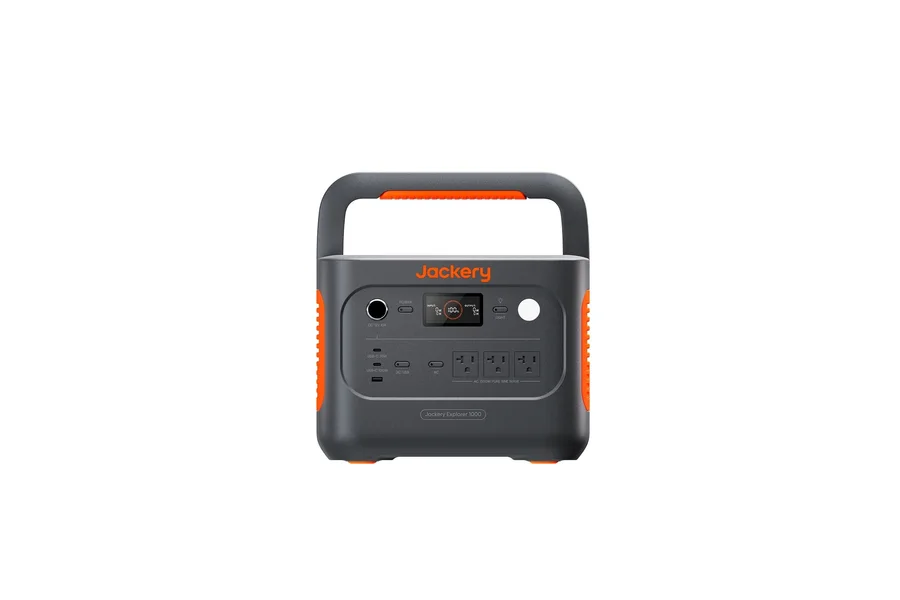
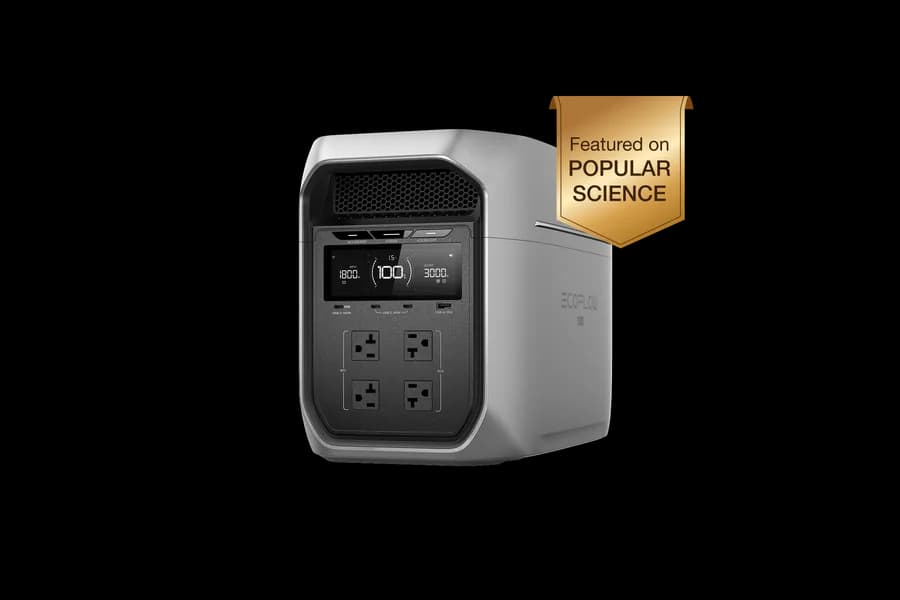
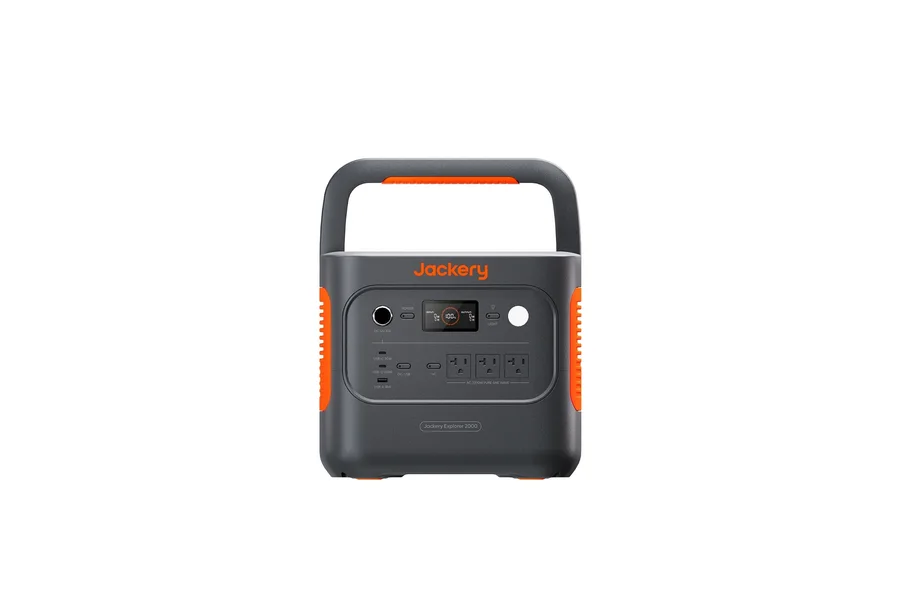
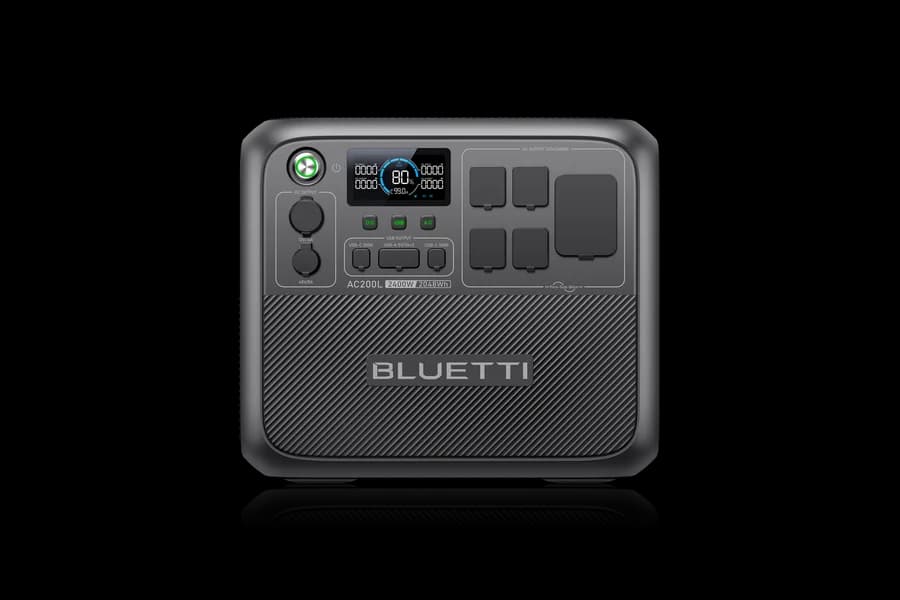
Capacity class is a starting point only. Specs shown are the manufacturer's published, per-model figures; prices and availability change, so confirm the actual unit's specifications — usable capacity, continuous and surge output, AC voltage, and maximum charge input — on the retailer's page against the devices you plan to run before buying.
Disclosure: Some links in this section are affiliate links. Your purchase price stays the same, and this site may earn a referral commission if you buy through them.
As an Amazon Associate I earn from qualifying purchases.
Recommendations above are based on the known battery-capacity and continuous-output requirements only. Before buying, verify the power station's continuous AC output against your rice cooker's input watts, plus its AC voltage, outlet configuration, real usable capacity, and your expected cook and keep-warm time — this is not an unconditional claim that a given unit will run your rice cooker.
A rice cooker is a gentler load than most kitchen appliances, but it still needs both things: enough battery capacity (watt-hours) for the cook cycle, and enough continuous AC output (watts) for the heating element while it runs. This calculator sizes the cook cycle from the watts and minutes you enter and reports the continuous watts you need. It does not guess a cook time from the rice type, model a keep-warm duty cycle, convert an IH or pressure rating, or check voltage and plug type.
The energy side of this uses the same method as the main Power Station Size Calculator. Two specifications decide whether a power station can run a rice cooker, and they are independent:
Because most rice cookers are well under a kilowatt, the continuous-output bar is lower than for a kettle or toaster oven, and a mid-size power station usually clears it. Capacity is more often the thing to watch, especially with keep-warm. To see how long a given unit lasts against a steady load, use the Power Station Runtime Calculator.
Small travel and single-cup rice cookers are often 200–400 W; typical family cookers are 500–800 W; large, IH, and pressure models can be 1,000 W or more. Do not assume a figure from the cup or litre capacity — read the label and enter that number.
Cook-cycle energy is the input watts multiplied by the fraction of an hour the element runs. A rice cooker holds a high draw through the heat-up and boil, then tapers off, so the figures below are a planning ceiling for the cook cycle, before any keep-warm time.
| Input watts | 20 min | 30 min | 45 min |
|---|---|---|---|
| 200 W | 67 Wh | 100 Wh | 150 Wh |
| 300 W | 100 Wh | 150 Wh | 225 Wh |
| 500 W | 167 Wh | 250 Wh | 375 Wh |
| 700 W | 233 Wh | 350 Wh | 525 Wh |
| 1,000 W | 333 Wh | 500 Wh | 750 Wh |
Add roughly 25% for an 85% inverter and a 20% reserve. A 700 W rice cooker for a 45-minute cycle is 525 Wh raw, around 772 Wh recommended — a 1,000 Wh power station holds that with room for a keep-warm hour or two.
A small portable 300 W rice cooker run for 30 minutes. Example figures — not every small cooker is 300 W, so use your own label wattage and cook time.
300 W × 30 min / 60 = 150 Wh
That 150 Wh is the raw cook-cycle energy. After 85% inverter efficiency it is about 176 Wh, and keeping a 20% reserve brings the recommended battery capacity to roughly 221 Wh. On capacity alone the calculator rounds that to about a 300 Wh power station, and the listed product catalogue begins at the 500Wh recommendation range.
The output requirement is only 300 W, which a small power station's inverter clears easily, so the recommendation stays in the 500Wh range rather than moving up. This is the low end of the scale: a compact rice cooker is one of the few hot-food appliances a 500 Wh-class unit can realistically run. The calculator's own rounded size figure (300 Wh) tracks the cook-cycle energy, not the catalogue range.
A 700 W family rice cooker run for 45 minutes for one cook cycle. This is the calculator's default example. Use your own numbers.
700 W × 45 min / 60 = 525 Wh
That 525 Wh is the raw cook-cycle energy. After 85% inverter efficiency it is about 618 Wh, and keeping a 20% reserve brings the recommended battery capacity to roughly 772 Wh. On capacity alone the calculator rounds that to about a 1,000 Wh power station, and the listed product catalogue begins at the 1,000Wh recommendation range — the first range whose real product capacity can meet that requirement.
Then the output requirement is applied. Separately from the 772 Wh, the power station has to supply at least 700 W continuously while the element heats. The 1,000Wh range's listed units already have a confirmed continuous rating well above 700 W, so the recommendation below stays in that range. A higher-wattage IH or pressure cooker would raise that output bar and could push the recommendation up a class; a simple resistive cooker like this one does not. The calculator's own rounded size figure does not change either way.
The minutes you enter are the powered time for one cook cycle, and that varies a lot. The calculator does not pick a time for you — there is no built-in “white rice = 30 minutes” or “brown rice = 60 minutes”. Cook time depends on:
Time the cycle on your own cooker, or read the cycle length from its manual, and enter that. A longer cycle for brown rice or a soak step raises the cook-cycle energy in direct proportion.
The calculator sizes the cook cycle only. Keep-warm may cycle or modulate the heater to hold the rice at temperature, and its average power draw varies substantially by model. Over several hours it can add as much energy as the cook itself. It is left out of the main calculation on purpose, because that draw is too model-specific to guess.
To account for keep-warm, use whichever of these you can:
To model both phases at once, add them as two rows in the main Power Station Size Calculator — one “Rice cooker — cook” device at the cook watts and runtime, and a separate “Rice cooker — keep warm” device at the keep-warm watts and hours. It calculates each phase separately and adds their watt-hours correctly. To see how a low steady keep-warm draw pulls a battery down over a long hold, use the Power Station Runtime Calculator.
During both the cook and keep-warm phases, a rice cooker's element usually switches on and off rather than running flat out. The way it does that differs by design:
Because the pattern is model-specific, this calculator does not model it. It uses full entered watts for the full entered minutes as a planning estimate. If you have measured your cooker and know it averages less over the cycle, shorten the minutes to the equivalent time at full power.
Induction-heating (IH) and pressure rice cookers cook faster and more evenly, but they draw more power than a simple resistive cooker of the same capacity — often 1,000 W or more at peak. That raises both numbers this calculator reports: the cook-cycle energy and the continuous AC output the inverter has to supply.
There is no fixed conversion. This calculator does not turn “IH” or “pressure” into a wattage, and it does not multiply a resistive figure to estimate one. Read the actual rated input watts off your model's label and enter that. A 1,100 W IH cooker is sized just like an 1,100 W toaster oven — see the Toaster Oven Power Station Calculator for how a higher continuous-output requirement can move the recommendation up a class.
For a small cooker, yes — this is one of the few hot-food appliances a 500 Wh unit can handle. A 500 Wh power station has roughly 325–400 Wh usable and an inverter often rated around 500 W. A 200–400 W travel rice cooker on a 25–35-minute cycle uses well under that usable capacity, and its wattage sits inside a 500 W inverter.
It gets tight fast, though. A 700 W family cooker already exceeds a typical 500 W inverter, and a full cycle plus a keep-warm hour can pass the usable capacity. Check the power station's continuous AC output against your cooker's input watts, and leave headroom for keep-warm if you use it.
Comfortably, for most rice cookers. A 1,000 Wh unit has about 650–800 Wh usable — enough for a 700 W family cooker's full cycle (around 525 Wh raw, roughly 772 Wh recommended) with a bit left for a keep-warm hour or two. IH and pressure models use more, so check the cycle energy for your unit.
Output is rarely the problem here: 1,000 Wh-class power stations almost always have a 1,500 W or larger inverter, well above any common rice cooker. If you also want to keep a fridge, lights, or a router going during an outage, add them together in the Home Power Outage Calculator.
Compared with an air fryer, an induction cooktop, a microwave, or an electric kettle, a rice cooker is a low, slow load — kinder on a small inverter, but the keep-warm phase can quietly outlast the cook. A slow cooker takes that trade further — even lower watts, but hours of runtime that make battery capacity the constraint.
A rice cooker is a low-stress outage load: modest wattage, a fixed cycle, and no need to stand over it. The main planning question is energy, not output — the cook cycle plus any keep-warm time, measured against what you have left after the essentials.
For an outage, that usually means:
Check every item against your rice cooker and your situation before buying:
A power station in the right range is a candidate, not a confirmation. Only its continuous AC output, checked against your cooker's watts, plus enough capacity for the cook and keep-warm, tells you it will run.
Size it on two numbers. Continuous AC output must be at or above the cooker's input watts while the element heats — most rice cookers are 200 to 800 watts, so a mid-size power station clears that, though IH and pressure models draw more. Cook-cycle energy is the watts times the cycle minutes divided by 60, plus about 25% for inverter losses and a reserve; a 700-watt cooker for 45 minutes is 525 Wh raw and roughly 772 Wh recommended, so a 1,000 Wh unit covers the cycle with room for keep-warm.
For a small 200-to-400-watt travel cooker, yes — the cook cycle uses well under a 500 Wh unit's usable capacity and fits a typical 500-watt inverter. A 700-watt family cooker usually exceeds a 500 Wh unit's inverter, and a full cycle plus keep-warm can pass its usable capacity.
Comfortably for most models. A 1,000 Wh unit has about 650 to 800 Wh usable — enough for a 700-watt cooker's full cycle with a bit left for a keep-warm hour or two — and its inverter is far above any common rice cooker's wattage. Check the cycle energy for an IH or pressure model, which uses more.
Small travel and single-cup cookers are often 200 to 400 watts; typical family cookers are 500 to 800 watts; large, induction-heating, and pressure models can be 1,000 watts or more. Read the figure off the rating label or measure it with a watt meter rather than assuming one from the capacity in cups or litres.
Multiply the input watts by the cycle minutes and divide by 60. A 700-watt cooker for a 45-minute cycle uses 700 x 45 / 60 = 525 Wh before inverter efficiency and a reserve; a 300-watt cooker for 30 minutes uses about 150 Wh. Keep-warm time adds more on top of this.
Over a few hours it can add as much energy as the cook itself. Keep-warm may cycle or modulate the heater, and its average draw varies substantially by model. This calculator sizes the cook cycle only; if you know the keep-warm watts, work out that energy separately (keep-warm watts times keep-warm hours) and add it to the cook-cycle figure, or use the manufacturer's total measured full-cycle figure.
Yes. Induction-heating and pressure rice cookers draw more than a simple resistive cooker of the same capacity, often 1,000 watts or more at peak, which raises both the cook-cycle energy and the continuous AC output the inverter must supply. There is no fixed conversion — use your model's actual rated input watts.
Yes — a rice cooker is one of the friendlier hot-food loads off-grid. A small model runs from a modest power station and needs no watching once it starts. Plan the cook-plus-keep-warm energy against your battery, and check the inverter's continuous rating covers the cooker's watts.
Most RV inverters clear a rice cooker's wattage easily. The thing to plan is the cook-plus-keep-warm energy against your battery bank, not the output. IH and pressure models draw more, so check their rating.
Yes, from a power station whose inverter can supply the cooker's watts — usually a formality for a resistive model. Back up medical equipment, the fridge, and lighting first, then run the cook cycle, and switch keep-warm off once the rice is done to save energy.