EcoFlow

EcoFlow DELTA 3 Classic
- Battery capacity
- 1,024 Wh
- Continuous AC output
- 1,800 W
- Rated surge / peak
- 3,600 W
- AC voltage
- 120V
Power station calculator
Work out what a portable power station needs to run a household AC electric blanket. The wattage is small, so among the listed power stations AC output is usually not the limiting spec — it is the overnight runtime that decides how big a battery you need.
This calculator is for household AC electric blankets. Enter the blanket's active heating watts from its label, at the setting you use, and the hours you want to run it. That figure also sizes the required AC output, so it is not a long-run cycling average. Electrical capacity alone does not prove compatibility — check the blanket manufacturer's manual first.
Enter the blanket's electrical input watts from its rating label, controller, or manual, and how many hours you want to power it.
Backup settings
Example only — 75 W electric blanket, 8 hours of use. Replace both with your blanket's actual input watts at your setting and your real run time.
882 Wh
Recommended battery capacity after inverter efficiency and reserve. On capacity alone the calculator rounds that up to about a 1,000 Wh power station, which falls in the 1,000Wh product recommendation range below.
Estimated blanket energy use
600 Wh
Minimum before reserve
706 Wh
This is a planning estimate. It assumes the blanket draws its full input watts for the whole time you enter. Enter the active or rated heating watts here — the same figure also sizes the required AC output, so it must be the full heating draw, not a long-run cycling average. Thermostat cycling can lower the real energy use; see below for how to fold that into a capacity estimate separately.
This is separate from battery capacity. A power station needs both.
An electric blanket draws little power — examples range from tens of watts to well over 100 W depending on size, controller, and model. Among the listed power stations, AC output is usually not the limiting specification for a low-watt blanket; the watt-hours over a full night are. That means battery capacity and runtime, not AC output, normally decide whether a unit lasts until morning — but manufacturer compatibility still has to be checked separately.
An electric blanket is a low-power resistive heating load; its start-up draw is negligible, so this page does not ask for a surge figure. 12V and USB heated blankets bypass the AC inverter and are outside this calculator's AC model — size them from their actual source-side energy use, allowing for any DC-conversion losses the device or power source specifies.
This calculator sizes energy (Wh) and reports the AC output (W) you need from the numbers you enter. Electrical capacity alone does not prove compatibility — it does not check voltage, plug, or whether the blanket maker allows inverter power, and it is not a safety approval. Follow the blanket manufacturer's instructions.
Recommendation
These 1,000Wh-class units have a confirmed continuous AC output of at least 75 W, plus enough battery capacity for this load.
Your estimate is around 1,000Wh, a common size for overnight use or several small devices.

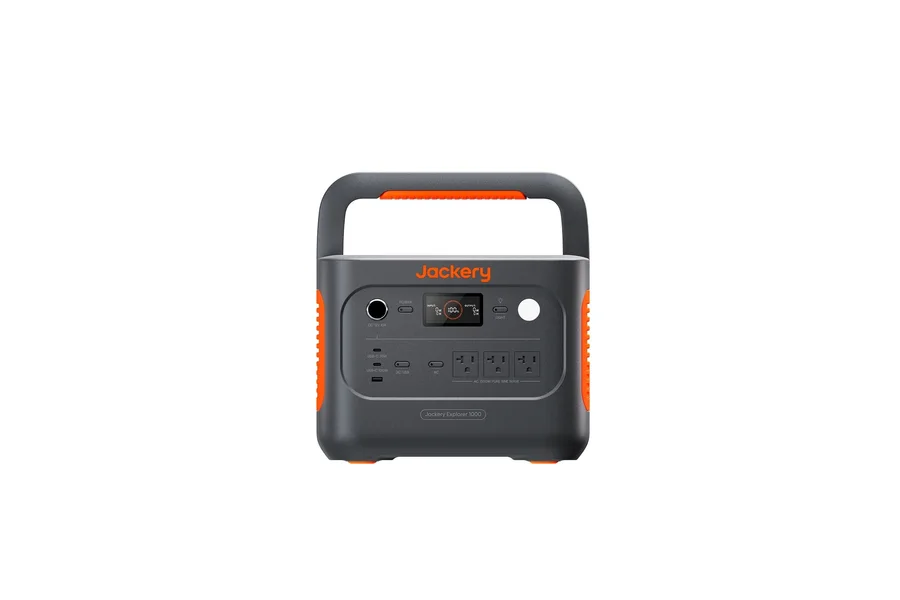
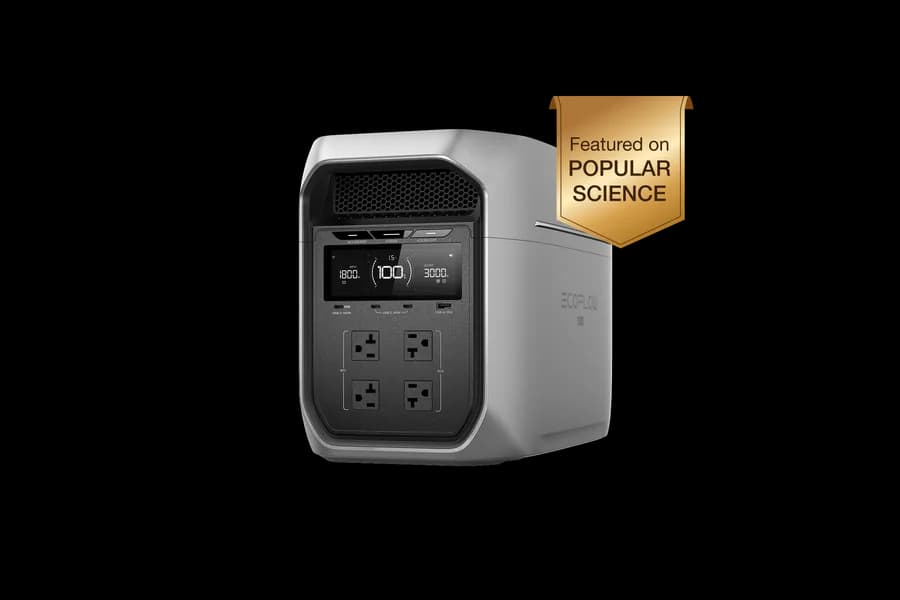
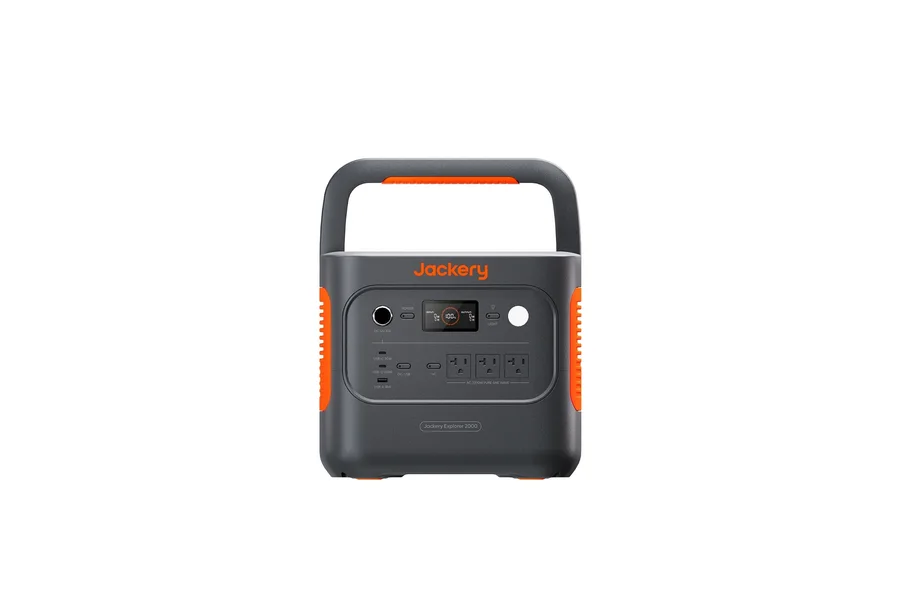
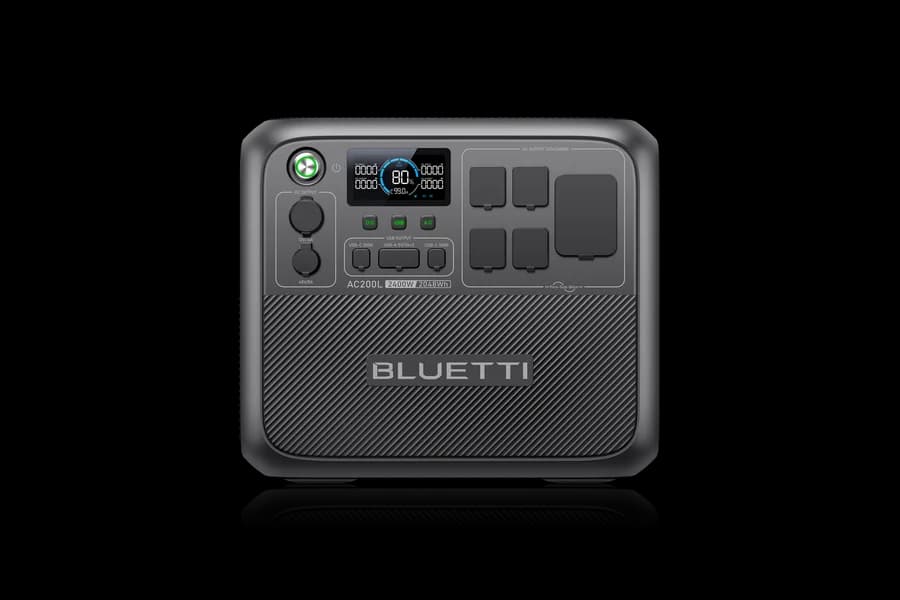
Capacity class is a starting point only. Specs shown are the manufacturer's published, per-model figures; prices and availability change, so confirm the actual unit's specifications — usable capacity, continuous and surge output, AC voltage, and maximum charge input — on the retailer's page against the devices you plan to run before buying.
Disclosure: Some links in this section are affiliate links. Your purchase price stays the same, and this site may earn a referral commission if you buy through them.
As an Amazon Associate I earn from qualifying purchases.
These recommendations only satisfy the calculated battery-capacity and AC-output requirements. They do not establish that your heated blanket manufacturer permits inverter power. Before buying, verify the power station's real usable capacity against your blanket's overnight energy, its AC output against the blanket's full active wattage, its voltage and outlet or DC-adapter compatibility, and the blanket manual's stance on inverter, generator, or power-station use — this is not an unconditional claim that a given unit will run your blanket for the full night, and it is not safety advice.
Check the blanket manual before using it on a power station
This tool works out the battery capacity and AC output for a household AC electric blanket. Electrical capacity alone does not prove compatibility. Some heated blankets and heated bedding products state in their manual that they must not be run from a generator, a power inverter, or a converter, even when the voltage looks right. Before using any AC heated blanket from a portable power station, read the blanket manufacturer's manual and confirm that inverter, generator, or portable-power-station use is permitted — a pure sine wave output does not make it compatible on its own. If the manufacturer prohibits it, do not run the blanket from the power station's AC outlet. This page sizes energy, not safety.
A household AC electric blanket draws only a modest wattage — examples run from tens of watts to well over 100 W depending on size, controller, and model — so it is easy to assume a small power station will run one. Wattage is rarely the sticking point; the runtime is. A full night is 6 to 10 hours, and a small load held that long adds up to a meaningful number of watt-hours.
At 75 W for 8 hours that is 600 Wh of raw energy, and after inverter losses and a reserve the recommended battery capacity is closer to 900 Wh — enough that a 500 Wh unit falls short for a whole night. The AC-output requirement stays at 75 W the entire time, which the listed power stations comfortably supply.
So for an electric blanket, battery capacity and runtime are the binding electrical constraint, not the inverter rating — the opposite of a kettle or a heater, where a brief high draw makes AC output the limit. One thing capacity does not settle: some heated blanket manuals prohibit inverter or generator power outright, so confirm your blanket permits power-station use before relying on any of this.
The energy side of this uses the same method as the main Power Station Size Calculator. Two specifications decide whether a power station can run an electric blanket, and they are independent:
The practical electrical question is whether the battery lasts until you wake up. To check how long a given unit runs a steady low load, use the Power Station Runtime Calculator. Sizing does not replace the blanket manual: some heated bedding is not rated for inverter or generator power at all.
As a rough guide only, small heated throws tend to be at the low end and large dual-control blankets on high draw the most, and figures can range from tens of watts to well over 100 W depending on size, controller, and model. These are search-intent examples, not a rule — do not assume a figure from the blanket size. Read the label or manual and enter the exact number for the setting you use.
Energy use is the active watts multiplied by the hours it runs. The wattages are small, but a full night is long, so the totals reach a few hundred watt-hours. These are a planning ceiling — a blanket whose thermostat cycles a lot will use less over the night.
| Active watts | 2 h | 4 h | 8 h |
|---|---|---|---|
| 40 W | 80 Wh | 160 Wh | 320 Wh |
| 60 W | 120 Wh | 240 Wh | 480 Wh |
| 75 W | 150 Wh | 300 Wh | 600 Wh |
| 100 W | 200 Wh | 400 Wh | 800 Wh |
| 120 W | 240 Wh | 480 Wh | 960 Wh |
| 150 W | 300 Wh | 600 Wh | 1,200 Wh |
Add roughly 25% for an 85% inverter and a 20% reserve. A 75 W blanket for 8 hours is 600 Wh raw, around 882 Wh recommended — a 1,000 Wh power station covers one night, where a 500 Wh unit does not.
A heated throw drawing 50 W, run for 4 hours on the sofa. Example figures — not every throw is 50 W, so use your own label wattage and run time.
50 W × 4 h = 200 Wh
That 200 Wh is the raw energy. After 85% inverter efficiency it is about 235 Wh, and keeping a 20% reserve brings the recommended battery capacity to roughly 294 Wh. On capacity alone the calculator rounds that to about a 300 Wh power station, and the listed product catalogue begins at the 500Wh recommendation range.
The AC-output requirement is only 50 W, which every listed unit clears, so the recommendation stays in the 500Wh range purely on capacity. A short evening on a low-wattage throw is one of the few heating uses a 500 Wh-class unit can cover. The calculator's own rounded size figure (300 Wh) tracks the energy, not the catalogue range.
A single electric blanket drawing 75 W, run for a full 8-hour night. This is the calculator's default example. Use your own numbers.
75 W × 8 h = 600 Wh
That 600 Wh is the raw energy. After 85% inverter efficiency it is about 706 Wh, and keeping a 20% reserve brings the recommended battery capacity to roughly 882 Wh. On capacity alone the calculator rounds that to about a 1,000 Wh power station, and the listed product catalogue begins at the 1,000Wh recommendation range — the first range whose real product capacity can meet that requirement.
Then the output requirement is applied. It is only 75 W continuously, far below what any listed unit can supply. So the recommendation stays in the 1,000Wh range, chosen entirely on capacity — the eight hours of runtime, not the 75 W, are what put it there. The calculator's own rounded size figure does not change either way.
Electric blankets have Low, Medium, and High settings, and most have a thermostat in the controller that switches the heating wires on and off to hold a temperature. Neither behaviour is fixed enough to model:
So the calculator does not convert a setting into a wattage or apply a duty-cycle discount. Enter the active input watts at the setting you plan to use — the draw while the element is heating, from the label or a watt meter — and otherwise the nameplate maximum as a conservative planning value.
The calculator uses the watts you enter for two things at once: the battery-capacity estimate and the required AC output. That is why the figure to enter is the active or rated heating draw — the power while the element is on — not a long-run average.
A blanket with a 75 W active draw might average only 45 W over a night once the thermostat is cycling. If you entered 45 W, the energy estimate would look more realistic, but the required AC output would drop to 45 W too — and the inverter still has to supply the full 75 W whenever the element switches back on. Do not put a cycling average in the watts field.
If you have measured your blanket — a total watt-hour reading over a night, or an average wattage — you can use that for a tighter capacity estimate on its own: multiply the measured average by the hours, or take the measured watt-hours directly. Then still check the power station's AC output against the blanket's full active or nameplate wattage separately. For a capacity estimate built from several figures, add them as rows in the main Power Station Size Calculator — and check the output against the full wattage yourself. The Power Station Runtime Calculator shows how a steady low draw pulls a battery down over a night.
Many electric blankets and heated throws switch themselves off after a set period — often somewhere between 1 and 12 hours, depending on the model and the setting. Some cannot be overridden.
The calculator does not assume a shutoff time. Enter the hours you actually expect the blanket to be drawing power. If your controller shuts off after, say, 8 hours and you go to bed for 9, the blanket is only a load for those 8 hours — enter 8, not 9. If you plan to restart it, add the extra powered time.
Check your own blanket's manual for its timer behaviour rather than assuming a common value, and treat the shutoff as a safety feature to keep, not an inconvenience to work around.
This calculator models a household AC electric blanket: it applies an inverter-efficiency factor because the power station has to convert DC battery power to AC, and it reports a required AC output. Low-voltage heated blankets do not run through the inverter, so that model does not apply to them:
12V and USB heated blankets are outside this calculator's AC model. Size them from their actual source-side energy use — the DC watts they draw times the hours — and account for any DC-conversion losses the device or power source specifies. Do not carry the AC calculator's result, including its required AC output, across to a 12V or USB blanket. As with an AC model, check the manufacturer's manual for permitted power sources.
On the electrical side, for a few hours — a heated blanket is one of the lighter heating loads a 500 Wh unit can take on. With this page's default 85% inverter efficiency and 20% reserve, a 500 Wh nameplate battery corresponds to roughly 340 Wh of planned load-side energy. A low-wattage throw run for an evening fits inside that; a mid-wattage blanket for a full night does not.
A full night is a different story. A 75 W blanket for 8 hours is 600 Wh raw, already past what a 500 Wh unit plans for, and a higher-wattage dual-control blanket runs it down in a few hours. Among the listed power stations the inverter is usually not the limit for a low-watt blanket — it comes down to whether the battery holds enough watt-hours for your run time. This is electrical sizing only: it does not mean your blanket manufacturer permits inverter or power-station use, which the manual has to confirm.
On the electrical side, usually yes for one blanket. With this page's default 85% inverter efficiency and 20% reserve, a 1,000 Wh nameplate battery corresponds to about 680 Wh of planned load-side energy. A 75 W blanket for an 8-hour night is 600 Wh raw and about 882 Wh recommended once losses and the reserve are added — near the edge of a 1,000 Wh unit, so it works with little margin. A lower setting or a smaller blanket leaves more headroom; a higher-wattage blanket on high may not last the night.
Thermostat cycling often means the real overnight draw is lower than the planning figure, which buys back some margin — but size for the active wattage first. This is electrical sizing only; the blanket manual still has to permit inverter or power-station use. If you also want to keep a CPAP, phone, or light going through the night, add them together in the Home Power Outage Calculator, or check a single overnight load in the CPAP Power Station Calculator.
A blanket pairs naturally with other quiet overnight loads. A CPAP is a similar few-hundred-watt-hour job, and a slow cooker is the daytime version of the same trade — low watts, long hours, capacity-limited rather than output-limited.
In a winter outage, a heated blanket usually uses far less power than heating a whole room with a space heater, because it warms the person and bedding directly. A space heater can pull well over a thousand watts and drain a portable unit in under an hour; a blanket drawing tens of watts can keep a person warm for a whole night on a small share of the same battery. Check the blanket manual allows inverter or power-station use first.
For an outage, that usually means:
Check every item against your blanket and your situation before buying or using one:
For an electric blanket, a power station in the right range is mostly a question of usable watt-hours for your run time. Confirm the unit's real usable capacity, and follow the blanket manufacturer's instructions — this page sizes energy, not safety, and does not establish that a given blanket may be run from an inverter.
For a household AC blanket, size it on battery capacity and runtime. Its wattage is small — examples range from tens of watts to well over 100 watts — so among the listed power stations AC output is usually not the limiting spec, while a full night turns that small load into several hundred watt-hours. Energy is the active watts times the hours; a 75-watt blanket for 8 hours is 600 Wh raw and roughly 882 Wh after inverter losses and a reserve, which points to a 1,000 Wh power station. This is electrical sizing only — check the blanket manual permits inverter or power-station use.
On the electrical side, for a few hours in the evening. With this page's default 85% inverter efficiency and 20% reserve, a 500 Wh nameplate battery plans for roughly 340 Wh of load-side energy, which covers a low-wattage throw for an evening. A 75-watt blanket for a full 8-hour night is 600 Wh raw and past that, and a higher-wattage dual-control blanket runs a 500 Wh unit down in a few hours. Sizing does not establish that your blanket manufacturer allows inverter power; the manual has to.
On the electrical side, usually, for one blanket. With this page's default 85% inverter efficiency and 20% reserve, a 1,000 Wh nameplate battery plans for about 680 Wh of load-side energy. A 75-watt blanket for 8 hours needs roughly 882 Wh recommended, so it works with little margin; a lower setting or a smaller blanket leaves more room, and a higher-wattage blanket on high may not last the night. Confirm the blanket manual permits inverter or power-station use before relying on this.
It varies widely by size, controller, and model — examples range from tens of watts for a small heated throw to well over 100 watts for a large dual-control blanket on high. Treat any range as a search-intent example, not a rule. Read the figure off the label, controller, or plug pack, or measure it with a watt meter while the blanket is actively heating.
Multiply the active watts by the hours: 75 x 8 = 600 Wh, before inverter efficiency and a reserve. Allowing about 25% for an 85% inverter and a 20% reserve brings that to roughly 882 Wh of recommended battery capacity.
Generally yes, but not by a fixed ratio. The relationship between a Low, Medium, or High setting and the actual power draw is set by the manufacturer and is not a clean percentage. Enter the measured active watts for the setting you use rather than assuming Low is half of High.
It can. Once the blanket is warm, the controller switches the element on and off, so the average power over a night is often below the active draw. How much lower depends on the room, the bedding, and the setting, so this calculator does not assume a reduction. Keep entering the active or rated wattage, because the same figure sizes the required AC output; do any lower energy-only estimate separately and still check the power station's output against the full wattage.
A 12V heated blanket runs from the power station's DC output and bypasses the AC inverter, so this page's AC model does not apply to it. Size it from its actual 12V draw times the hours, allowing for any DC-conversion losses the device or power source specifies, and do not carry the AC calculator's result or its required AC output across to a DC blanket. Check the manufacturer's manual for permitted power sources, as with an AC model.
Often, yes — a blanket usually uses far less power than heating a whole tent or cabin with a space heater, because it warms the person and bedding directly. Plan the overnight energy against your battery, use a 12V blanket where possible to bypass the inverter, and budget extra margin for cold nights, which reduce a battery's usable capacity. First confirm the blanket manual allows inverter or generator power.
For a household AC blanket whose manual permits inverter power, it is one of the more efficient winter-outage loads: a blanket drawing tens of watts can keep a person warm all night on a small share of what a space heater would use, because it heats the person rather than the room. Back up medical equipment, the fridge, and lighting first, then run the blanket, and drop to a lower setting once the bed is warm.